Studies
How Safe Is the Air in Hair Salons? A Scientific Review
A major review confirms stylists are exposed to higher levels of airborne chemicals than clients, with known links to respiratory and skin issues.
June 13, 2026
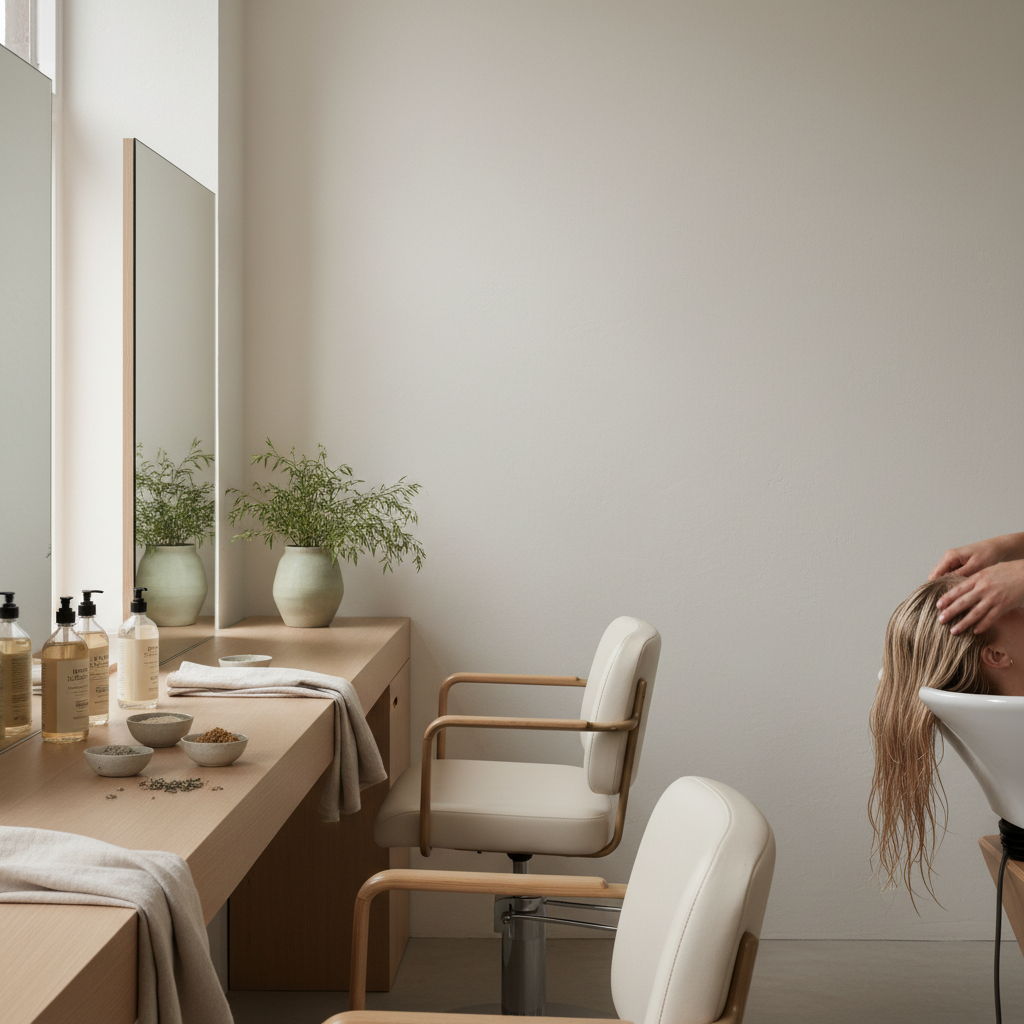
[!answer] A 2022 systematic review of air quality in hair salons finds that stylists face significant occupational exposure to volatile organic compounds (VOCs) and other chemicals from hair products. These exposures are consistently higher than those for clients and are linked to respiratory, dermal, and neurological symptoms among professionals.[1]
That clinical answer, however, doesn't capture the full story of what happens when you step into a salon. For clients, it's a few hours of pampering and transformation; for the professionals who work there, it's a daily environment with measurable, long-term health implications that are only recently being systematically studied.
What is in the air at a hair salon?
The air in a typical hair salon is a complex chemical mixture, largely composed of volatile organic compounds (VOCs) and other airborne particles released from the products used throughout the day [1]. VOCs are chemicals that easily evaporate into the air at room temperature. When you can smell a product—whether it’s the sharp scent of a disinfectant, the floral notes of a hairspray, or the distinct aroma of hair color developing—you are inhaling VOCs.
A comprehensive 2022 scoping review, which synthesized data from dozens of individual studies, provides a clear picture of what hairdressers are breathing all day [1]. The most commonly detected chemicals include ethanol and isopropanol (from hairsprays and other styling products), ammonia (from hair color), and formaldehyde, a known carcinogen often associated with certain hair-straightening treatments. Other significant compounds include acetone and toluene, common solvents found in a variety of cosmetic products.
Beyond VOCs, salon air also contains semi-volatile organic compounds (SVOCs) and particulates. Bleaching powders, for instance, release persulfates, which are known to cause respiratory irritation and can lead to occupational asthma. The broad category of "fragrance" or "parfum" also contributes significantly to the chemical load, as a single fragrance can be composed of dozens or even hundreds of individual, often unlisted, VOCs.
How are stylists exposed to these chemicals?
Inhalation is the primary route of exposure for stylists working in a salon environment [1]. Every spray of a hairspray aerosolizes a cloud of VOCs that can linger in the air. Every application of hair color or bleach releases ammonia and persulfates. Chemical straightening treatments, when heated, can release formaldehyde gas directly into the stylist’s breathing zone. The exposure is constant, multifaceted, and directly linked to the tasks being performed.
The layout and conditions of the salon itself play a major role. Small, poorly ventilated spaces can allow chemical concentrations to build up over the course of a workday. The simple act of blow-drying can re-aerosolize particles that have settled on surfaces, while the heat from styling tools can increase the rate at which chemicals are released from a product applied to the hair. This creates a persistent chemical environment that professionals inhabit for eight or more hours a day, week after week.
Who is most at risk: clients or stylists?
The evidence is unequivocal: professional hairdressers are at a significantly higher risk than their clients [1]. This comes down to the fundamental toxicological principle of exposure duration and frequency. A client might visit a salon for a two-hour color service every six weeks. A stylist, on the other hand, performs multiple chemical services per day, five or six days a week. This transforms an acute, infrequent exposure for the client into a chronic, daily occupational exposure for the stylist.
The 2022 review highlights this gap as a critical issue in cosmetic safety assessment. Most product safety evaluations are designed with the consumer in mind, assuming intermittent use. However, these assessments do not adequately capture the risk profile for a professional whose exposure level is orders of magnitude higher over a working lifetime.
[!quote] Safety assessments of hair products are mainly focused on consumers, but exposure for professional hairdressers might be substantially higher. — [1]
This distinction is crucial. While a single exposure to a high-VOC product is unlikely to harm a client, the cumulative burden on a stylist’s body over years or decades is a serious occupational health concern. The health effects seen in stylists are a direct result of this sustained, long-term exposure.
What does the research say about health effects?
The body of scientific literature consistently shows a higher prevalence of certain health problems among hairdressers compared to the general population, directly linked to their workplace exposures [1]. The most well-documented effects are respiratory and dermal. Occupational asthma is notoriously common in the profession, often triggered by the inhalation of persulfates from bleach or other aerosolized chemicals. Symptoms can range from wheezing and coughing to severe, debilitating asthma attacks.
Skin conditions, particularly allergic contact dermatitis, are also rampant. Constant handling of wet products, dyes, and shampoos breaks down the skin’s natural barrier, while chemicals like p-phenylenediamine (PPD) in hair dye are potent sensitizers. While this is a skin exposure, the review on airborne chemicals still acknowledges the holistic nature of salon exposures.
More recent research, summarized in the scoping review, also points toward potential neurological symptoms, such as headaches, dizziness, and memory issues, linked to solvent exposure [1]. The evidence for long-term risks like cancer or reproductive health issues is still developing and often difficult to study, but the consistent pattern of respiratory and neurological symptoms from short-term exposure is well-established.
Are some salon services riskier than others?
Yes, not all salon services contribute equally to air contamination. Hair bleaching and coloring are among the highest-risk activities due to the release of ammonia and ammonium persulfates, powerful respiratory irritants [1]. These chemicals are necessary for the hair dyeing process but are also primary drivers of occupational asthma among stylists.
Keratin-based hair straightening treatments have also been a significant source of concern. Many of these products have been found to contain or release formaldehyde when heated. Health agencies worldwide, including the US Occupational Safety and Health Administration (OSHA), have issued warnings about the dangers of formaldehyde exposure in salons, as it is a known human carcinogen.
Even seemingly benign styling can contribute. The sheer volume of aerosol hairsprays used in a busy salon releases a significant load of VOCs, including alcohols and fragrance compounds. As our understanding of the risks of cumulative exposure grows, particularly concerning chemicals like phthalates often hidden in fragrance mixtures, it becomes clear that every product choice matters.
Why isn't this better regulated?
This is a common question, and the answer lies in a regulatory gray area between consumer products and workplace safety. In the United States, the Food and Drug Administration (FDA) regulates cosmetics for consumer safety. Their assessments, as noted, are based on typical consumer use patterns—not the daily, high-intensity exposure of a salon professional [1].
The safety of the workplace itself falls under the jurisdiction of OSHA. While OSHA has set permissible exposure limits (PELs) for specific chemicals like formaldehyde and ammonia, enforcing these standards in hundreds of thousands of small, independent salon businesses is a monumental challenge. Furthermore, OSHA’s standards do not always account for the complex chemical mixtures and potential synergistic effects of being exposed to dozens of different chemicals at once.
This leaves stylists in a vulnerable position. The products they use are deemed "safe" for the consumer who buys a bottle of shampoo once a month, but the regulatory framework doesn't fully address the reality of using those same products dozens of times a day as a condition of employment. This gap is a key focus of the research highlighted in the 2022 review, which calls for a new look at how professional-use products are evaluated.
How can salon air quality be improved?
Improving air quality in salons is not just possible; it's a critical step toward protecting the health of the professionals who work in them. The most effective intervention is engineering controls, specifically proper ventilation [1]. This can include high-quality HVAC systems with strong exhaust fans, particularly at mixing stations, as well as supplemental air purifiers equipped with both HEPA filters (for particulates) and activated carbon (for VOCs).
Product selection is another powerful tool. A growing number of professional brands are offering "low-VOC" or "ammonia-free" product lines. While these labels require scrutiny, they represent a move in the right direction. Stylists and salon owners can actively seek out and support brands that prioritize ingredient transparency and the reduction of hazardous chemicals.
Finally, simple work practices can make a difference. Mixing bleach or color in a well-ventilated area, putting lids back on products immediately, and using alternatives to aerosol sprays when possible can all reduce the overall chemical load in the air. For clients, choosing to patronize salons that openly discuss their commitment to ventilation and safer products can help drive the industry toward a healthier standard.
The takeaway
The scent of a hair salon is the scent of chemistry at work, but for the stylists who breathe it in daily, it represents a significant occupational health risk. The scientific evidence confirms that chronic exposure to airborne chemicals is linked to serious health effects. Improving ventilation and making conscious product choices are not merely "nice-to-haves"—they are essential for ensuring the long-term health and safety of the professionals who care for our hair.
Sources
- [1] Occupational Exposure of Hairdressers to Airborne Hazardous Chemicals: A Scoping Review. — Kezic S, Nunez R, Babić Ž, Hallmann S, Havmose MS, Johansen JD, John SM, Macan M, Symanzik C, Uter W, Weinert P, Turk R, Macan J, van der Molen HF.. 2022 · Europe PMC
- [2] Program Abstracts from the 21st International Association of Gerontology and Geriatrics (IAGG) World Congress.. 2017 · Europe PMC
- [3] OpenFDA Cosmetic Adverse Event Report (#1). FDA Adverse Event Reporting System (2008) · OpenFDA