Ingredients
Phthalates, Pregnancy, and Personal Care: What Expectant Parents Should Know
Understanding the potential impacts of phthalates in cosmetics on maternal hormones is crucial for expectant parents. This article delves into the current science, offering a balanced perspective on a complex topic.
April 20, 2026
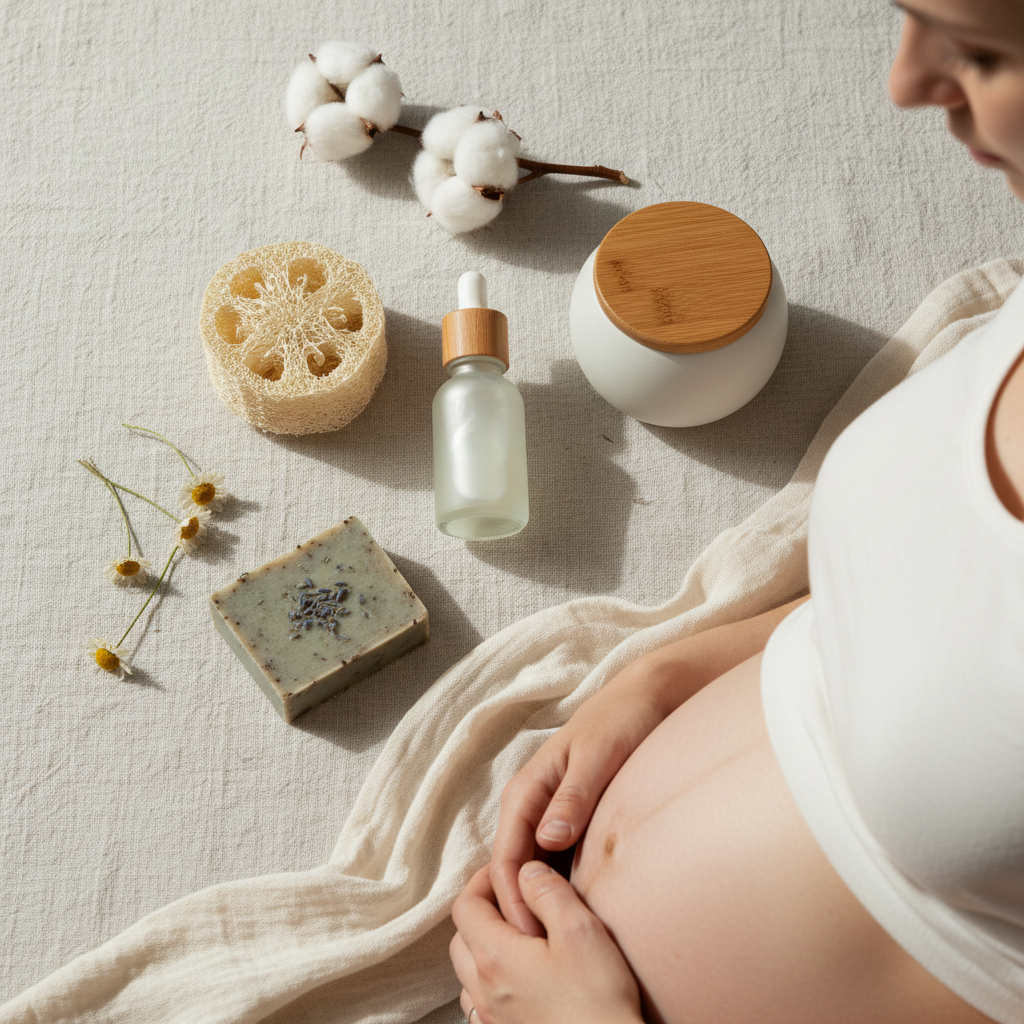
The journey of pregnancy is often accompanied by heightened awareness about what we put into and onto our bodies. For many expectant mothers, this extends to personal care products, with a growing interest in understanding the potential impact of ingredients like phthalates on hormonal health and fetal development. Unraveling the science behind these concerns requires a nuanced approach, separating sensationalism from legitimate scientific inquiry.
The Ubiquitous Nature of Phthalates
Phthalates are a group of chemicals often referred to as "plasticizers" due to their use in making plastics more flexible. However, their presence extends far beyond plastic containers. In cosmetics, they are frequently used in fragrances, nail polishes, hair sprays, and other products to help hold color, provide durability, or enhance scent [1][2]. This widespread application means that exposure to phthalates is common, and understanding the implications of daily exposure, especially during crucial life stages like pregnancy, is paramount.
Research indicates that personal care products (PCPs) are a significant source of exposure to phthalates, alongside other endocrine-disrupting chemicals (EDCs) like parabens [4]. These chemicals can enter the body through skin absorption, inhalation, or even ingestion from contaminated hands [1]. Once in the body, their chemical structure allows them to interact with our endocrine system, which is responsible for hormone production and regulation [3].
[!quote] Phthalates are not just in plastics; their widespread use in cosmetics means a common, daily exposure, warranting a closer look at their potential impact, especially during pregnancy.
Phthalates and Hormonal Disruption: The Current Understanding
Endocrine-disrupting chemicals (EDCs) are defined by their ability to interfere with the body's hormonal activity [3]. Phthalates are among these EDCs, and their potential to disrupt normal hormone function has been a subject of ongoing scientific investigation. The concern during pregnancy is particularly notable because maternal hormones play a critical role in fetal development [4].
A study examining pregnant women in Puerto Rico investigated the association between self-reported PCP use and maternal hormone levels, including sex steroids and thyroid hormones [4]. This research highlights the complex interplay between environmental exposures and the delicate hormonal balance required for a healthy pregnancy. While the study indicates an association, it's important to understand that correlation does not always equal causation, and further research is continuously refining our understanding of these relationships.
The scientific community emphasizes that more research is needed to fully understand the long-term effects of EDC exposure in children and during development [3]. While some studies suggest potential links, the precise mechanisms and the extent of their impact are still being actively investigated. It’s a field where uncertainty exists, and responsible interpretation of the science is key.
The Nuance of "Mixtures" and Maternal Leave-On Cosmetics
One of the complexities in studying phthalate exposure is that we are rarely exposed to a single chemical in isolation. Instead, we encounter mixtures of various chemicals from different sources [1]. This "cocktail effect" makes it challenging to pinpoint the exact impact of any single ingredient or product. Maternal leave-on cosmetics, which remain on the skin for extended periods, raise particular questions about continuous exposure.
The concept of "contaminants of emerging concern" (CECs), which include many ingredients found in personal care products, underscores the need for ongoing vigilance and research [5]. These contaminants, though often present in small amounts, can have cumulative effects that are not yet fully understood. Adverse event reports related to cosmetics exist [7][8][9][10], but these reports are broad and do not specifically link to phthalate mixtures or hormonal disruption.
[!quote] The reality of chemical exposure is rarely about a single ingredient; instead, we navigate complex mixtures whose combined effects during critical periods like pregnancy are still being unraveled.
Navigating Uncertainty: A Calm and Measured Approach
When faced with scientific information that is still evolving, it’s natural to feel a degree of apprehension. However, the goal of Linea is to provide evidence-based information that empowers you to make informed choices without undue alarm. The scientific consensus is that while concerns about phthalates and their potential for endocrine disruption are real and merit ongoing investigation, definitive conclusions about direct and widespread harm from cosmetic use are not yet firmly established. The science doesn't say phthalates in cosmetics are definitively dangerous in all contexts — it emphasizes the importance of continued research and understanding of cumulative exposures [3][4].
For expectant parents, this means approaching product choices thoughtfully. Awareness is the first step. Understanding that certain ingredients are under scrutiny allows for a more conscious evaluation of personal care routines. It’s about making choices that align with your comfort level and priorities, supported by the best available science.
Practical Takeaways for Expectant Parents
Given the ongoing research and the desire to minimize potential exposures, expectant parents might consider opting for personal care products that are intentionally formulated without phthalates, especially in leave-on products. Reading ingredient labels carefully and choosing brands transparent about their formulations can be a helpful strategy. While the science continues to evolve, making informed and proactive choices provides a sense of agency in navigating this complex landscape.
Sources
- [1] The impact of perfumes and cosmetic products on human health: a narrative review. — Alblooshi S. (2025) · Europe PMC
- [2] Gender, self-care and toxic exposures: a narrative review of personal care product use and health equity implications. — Prifti E, El-Osta A. (2025) · Europe PMC
- [3] Endocrine Disrupting Chemicals' Effects in Children: What We Know and What We Need to Learn? — Predieri B, Iughetti L, Bernasconi S, Street ME. (2022) · Europe PMC
- [4] Personal care products: Demographic characteristics and maternal hormones in pregnant women from Puerto Rico. — Rivera-Núñez Z, Ashrap P, Barrett ES, Llanos AAM, Watkins DJ, Cathey AL, Vélez-Vega CM, Rosario Z, Cordero JF, Alshawabkeh A, Meeker JD. (2022) · Europe PMC
- [5] Major contaminants of emerging concern in soils: a perspective on potential health risks. — Maddela NR, Ramakrishnan B, Kakarla D, Venkateswarlu K, Megharaj M. (2022) · Europe PMC
- [6] Abstracts for the ISEE Asia and Western Pacific (AWPC) Chapter (2024) · Europe PMC
- [7] OpenFDA Cosmetic Adverse Event Report (#1). FDA Adverse Event Reporting System (2021) · OpenFDA
- [8] OpenFDA Cosmetic Adverse Event Report (#2). FDA Adverse Event Reporting System (2018) · OpenFDA
- [9] OpenFDA Cosmetic Adverse Event Report (#3). FDA Adverse Event Reporting System (2016) · OpenFDA
- [10] OpenFDA Cosmetic Adverse Event Report (#4). FDA Adverse Event Reporting System (2020) · OpenFDA