Guides
A Guide to Building a Non-Comedogenic Routine for Acne
Build an effective non-comedogenic skincare routine for acne-prone skin with gentle cleansers, non-oily moisturizers, and daily SPF to support clear skin.
July 13, 2026
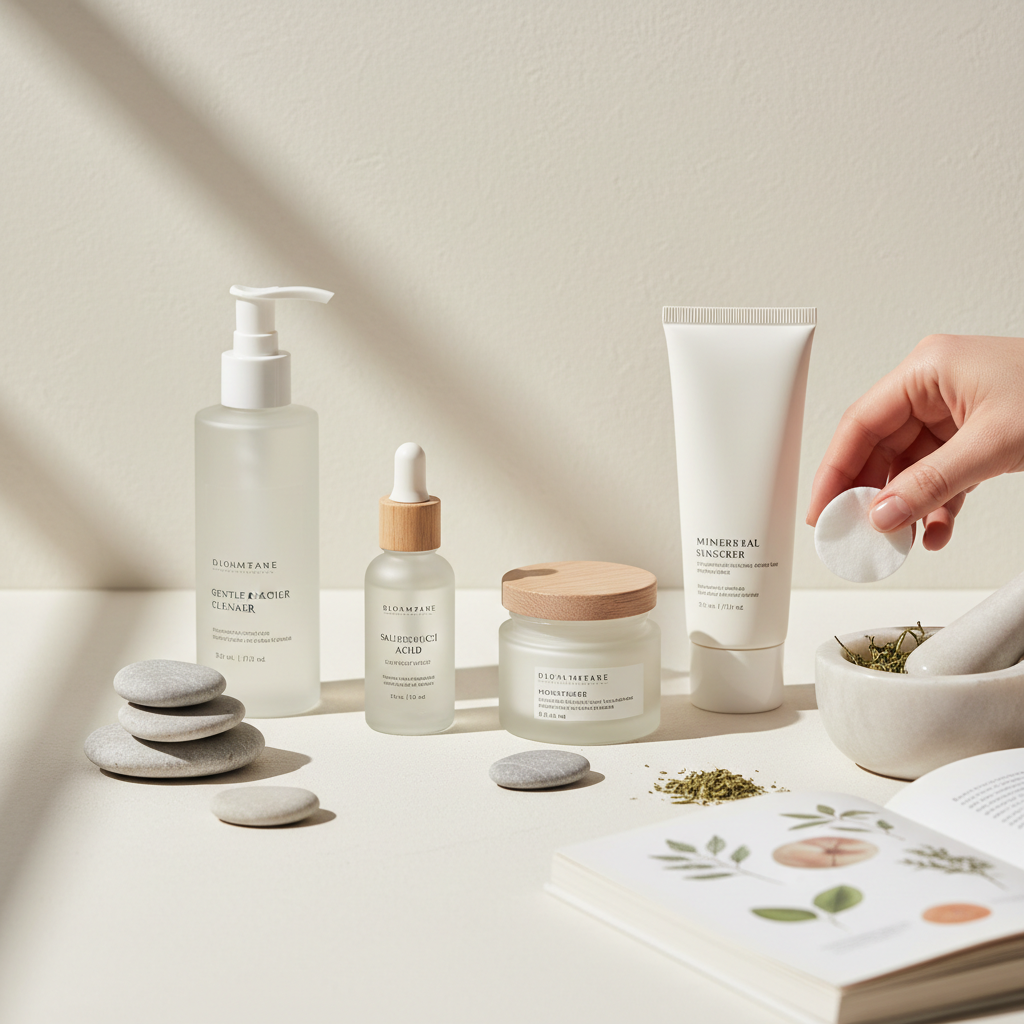
[!answer] Building a non-comedogenic skincare routine for acne-prone skin requires a simple, consistent approach. It centers on three core steps: washing with a gentle, pH-balanced cleanser twice daily, applying a lightweight, non-oily moisturizer to maintain the skin barrier, and using broad-spectrum sunscreen every day to prevent pigmentation.
Crafting a skincare routine to manage acne can feel like a delicate balancing act. The impulse is often to throw a battery of harsh products at the problem, but a growing body of evidence suggests a simpler, gentler approach is not only more effective but also more sustainable.
What does "non-comedogenic" actually mean?
The term "non-comedogenic" is one of the most common phrases you'll see on products geared toward oily or acne-prone skin, but its meaning isn't legally regulated. At its core, it means a product has been formulated to avoid ingredients known to clog pores. A clogged pore, or a comedo, is the primary lesion of acne. When excess oil (sebum) and dead skin cells get trapped in a follicle, it can form a blockage. This can result in a closed comedo (whitehead) or an open comedo (blackhead), and can become inflamed if bacteria proliferate.
Manufacturers who label their products as non-comedogenic typically avoid heavy, occlusive oils and butters that have a higher likelihood of causing blockages. Instead, they opt for lighter ingredients and textures—think gels, lotions, and oil-free formulations. However, because skin is highly individual, a product labeled "non-comedogenic" is not an absolute guarantee that it won't cause breakouts for you. It serves as a helpful guideline, indicating that the manufacturer has formulated the product with pore-clogging potential in mind.
Think of it as a starting point. It filters out many potentially problematic formulations, but personal trial and error remains a necessary part of the process. What works for one person may not work for another, even if both have acne-prone skin. Paying attention to how your own skin responds is always the most important step.
What are the core steps of an acne-friendly routine?
The most effective skincare routine for acne-prone skin is often the most simple. A consensus among dermatology experts is that a foundational routine should focus on three key pillars: cleansing, moisturizing, and sun protection [1]. This "C-M-S" approach works to balance the skin, maintain its protective barrier, and improve your skin’s tolerance for any prescription or over-the-counter acne treatments you might be using, like retinoids or benzoyl peroxide.
According to an expert panel of dermatologists, this supportive skincare is not an afterthought; it is a critical part of a comprehensive acne management plan [1]. A consistent, gentle routine helps to minimize irritation, which can itself be a trigger for breakouts. It creates a healthy baseline, allowing targeted treatments to work more effectively and with fewer side effects like excessive dryness, redness, and peeling.
Before adding in serums, toners, or masks, mastering this simple trio is the most impactful step you can take. Consistency is more important than complexity. A three-step routine that you can stick with every single day will always yield better results than a complicated, 10-step regimen that you only follow sporadically or that leaves your skin feeling stripped and irritated.
How should I choose a cleanser for acne-prone skin?
A good cleanser for acne-prone skin should clean effectively without stripping the skin of its natural moisture. Over-washing or using harsh, high-pH soaps can compromise the skin’s acid mantle—a delicate, slightly acidic film on the surface that acts as a protective barrier against bacteria and moisture loss. A damaged barrier can lead to increased dehydration and irritation, which can paradoxically worsen acne.
Look for cleansers that are labeled as "gentle," "pH-balanced," or "soap-free." Gel or foam textures are often a good fit for oilier skin types. Experts recommend washing your face twice a day—once in the morning and once at night—as well as after sweating heavily [1]. Use lukewarm water and your fingertips to gently massage the cleanser onto your skin, and avoid aggressive scrubbing or using abrasive tools, which can create micro-tears and increase inflammation.
When reading ingredient lists, simple is often better. While some medicated cleansers containing ingredients like salicylic acid can be beneficial, the primary goal of this step is just to clean the skin. If you are using other leave-on acne treatments, a simple, non-medicated cleanser is often the best choice to avoid irritation. Learning to look past marketing claims and spot allergens in facial cleansers on the label is a key skill for managing reactive, acne-prone skin.
Is moisturizer really necessary for oily, acne-prone skin?
Yes, absolutely. The idea that oily or acne-prone skin doesn’t need moisturizer is one of the most persistent skincare myths. In fact, keeping skin adequately hydrated is essential for managing breakouts. When your skin becomes dehydrated, it can compensate by producing even more oil, creating a cycle of oiliness and breakouts. Furthermore, many of the most effective acne treatments, from topical retinoids to benzoyl peroxide, are notoriously drying.
Using a moisturizer every day helps to replenish the moisture lost during cleansing and to fortify the skin barrier. A healthy barrier helps your skin better tolerate active ingredients, reducing the redness, flaking, and sensitivity that can cause people to give up on their treatments too soon [1]. This is a key part of what dermatologists call "adherence"—making a treatment plan easy to stick with for the long haul.
Of course, the type of moisturizer matters. You’ll want to choose a formula that is lightweight and non-comedogenic. Look for labels that say "oil-free" or "gel-cream." Ingredients like hyaluronic acid, glycerin, and ceramides are excellent because they provide hydration and barrier support without adding heaviness or clogging pores. Apply moisturizer morning and night to clean, damp skin.
[!quote] Effective acne management extends beyond pharmacologic therapy, emphasizing proper skincare, patient education, and adherence strategies. — [1]
Why is sunscreen so important when you have acne?
Sunscreen is a non-negotiable final step in any morning skincare routine, but it is especially crucial for those with acne. Many acne-fighting ingredients, including salicylic acid, glycolic acid, and especially retinoids (like tretinoin and adapalene), increase your skin’s photosensitivity. This makes it much more susceptible to sun damage, including burns, premature aging, and skin cancer.
Beyond sun protection, daily SPF use is also your best tool for preventing post-inflammatory hyperpigmentation (PIH). Those dark spots that linger for weeks or months after a pimple has healed are caused by an overproduction of melanin in response to inflammation. Sun exposure darkens these spots and makes them last significantly longer. A broad-spectrum sunscreen with an SPF of 30 or higher is one of the most effective ways to ensure these marks fade more quickly and evenly.
As with moisturizers, the texture and formulation are key. The heavy, greasy sunscreens of the past have been replaced by elegant, lightweight options. Look for non-comedogenic and oil-free formulas, often marketed as gel lotions or fluid sunscreens. Mineral sunscreens containing zinc oxide can also be a great choice for acne-prone skin, as zinc can have a calming effect on inflammation.
What ingredients can complement an acne-prone routine?
Once you have a consistent C-M-S routine in place, you can consider incorporating a few key active ingredients to enhance your results. These should be introduced one at a time to monitor your skin’s reaction. Salicylic acid, a beta-hydroxy acid (BHA), is oil-soluble, meaning it can penetrate into pores to dissolve sebum and dead skin cells, making it an excellent choice for treating blackheads and whiteheads. It can be found in cleansers, toners, or spot treatments.
Niacinamide (a form of vitamin B3) is another powerhouse ingredient for acne-prone skin. It’s a versatile antioxidant that helps regulate oil production, reduce inflammation and redness, strengthen the skin barrier, and improve the appearance of post-inflammatory hyperpigmentation. It is typically found in serums or moisturizers and is generally well-tolerated by most skin types.
For exfoliation, it’s best to avoid harsh physical scrubs, which can aggravate inflammation. Instead, consider a gentle chemical exfoliant containing alpha-hydroxy acids (AHAs) like glycolic or lactic acid, or the BHA salicylic acid. Used 1-3 times per week, these can help improve skin texture and prevent pores from clogging without the irritation of physical scrubbing. The key is to start slow and avoid over-exfoliation, which can damage the skin barrier.
How long should I stick with a new routine before changing it?
Patience is paramount when it comes to skincare. It’s tempting to abandon a new product or routine if you don’t see results within a few days, but this is often counterproductive. Skin cell turnover—the process of new cells being created and old ones being shed—takes approximately 28 days, and can be even longer as we age. It takes at least one full cycle, and often two, to see how your skin is truly responding to a new regimen.
Consistency is the foundation of any successful acne management plan [1]. Constantly switching products can irritate your skin and make it impossible to determine what is actually working. Dermatologists recommend giving any new routine a fair trial of at least 6-8 weeks before making a judgment. During this time, monitor your skin for both positive and negative changes. Take weekly photos in the same lighting to track your progress objectively.
When introducing a new product into an established routine, always do so one at a time. Wait at least two weeks before adding another new item. This allows you to isolate any potential cause of irritation or breakouts. If your acne persists or worsens after consistently following a gentle, non-comedogenic routine for several months, it’s a good time to consult a board-certified dermatologist to discuss prescription-strength options.
The takeaway
For acne-prone skin, the most effective skincare routine is built on a foundation of "less is more." Focus on mastering the core three steps: gentle cleansing, lightweight moisturizing, and daily sun protection. This simple, consistent approach will help balance your skin, support the efficacy of any medical treatments, and put you on the path to a clearer, healthier complexion.
Sources
- [1] PRACT-India: Practical Recommendations on Acne Care and Medical Treatment in India-A Modified Delphi Consensus. — Madnani N, Saraswat A, Nott A, Jakhar D, Gupta LK, Kohli M, Puhan MR, Sangolli P, Nagar R, Rathi SK, Aurangabadkar S, DA S, Ka S, Dogra S, Dhoot D, Balasubramanian A, Patil S, Barkate H.. 2025 · Europe PMC
- [2] Real-World Evaluation of the Episoft® AC Moisturizer With Broad-Spectrum Sunscreen in the Management of Retinoid-Induced Dermatitis: A Retrospective Observational Study. — Nakra G, Modi A, Hegde S, Bala S, Bhushan S, Dhoot D, Balasubramanian A, Bhosale P, Gadkari R, Patil S.. 2026 · Europe PMC
- [3] Expert Consensus on the Rational Approach to Isotretinoin Usage for Effective Management of Acne: ERAISE ACNE Recommendations. — Kandhari S, Thomas J, Khunger N, Vedamurthy M, Godse K, Saraswat A, Madnani N, Somani V, Tahiliani S, Shah B, Srinivas CR, Mittal A, Girdhar M, Sachdeva M, Varma S, Shenoy M, Barua S, De A, Jain A, Sharma A.. 2026 · Europe PMC
- [4] Risk perception of personal care products: A scoping review of knowledge translation strategies in environmental health. — Diyab R, De Michino G, Yousufzai SJ, Barakat C.. 2025 · Europe PMC
- [5] Autolougous platelet concentrates in esthetic medicine. — Davies C, Miron RJ.. 2025 · Europe PMC