Ingredients
Aluminum in Antiperspirants: A Scientific Look at Sweat & Safety
Aluminum salts block sweat by forming temporary plugs in ducts. Major health agencies consider them safe, with no definitive link to cancer or Alzheimer's, due.
May 21, 2026
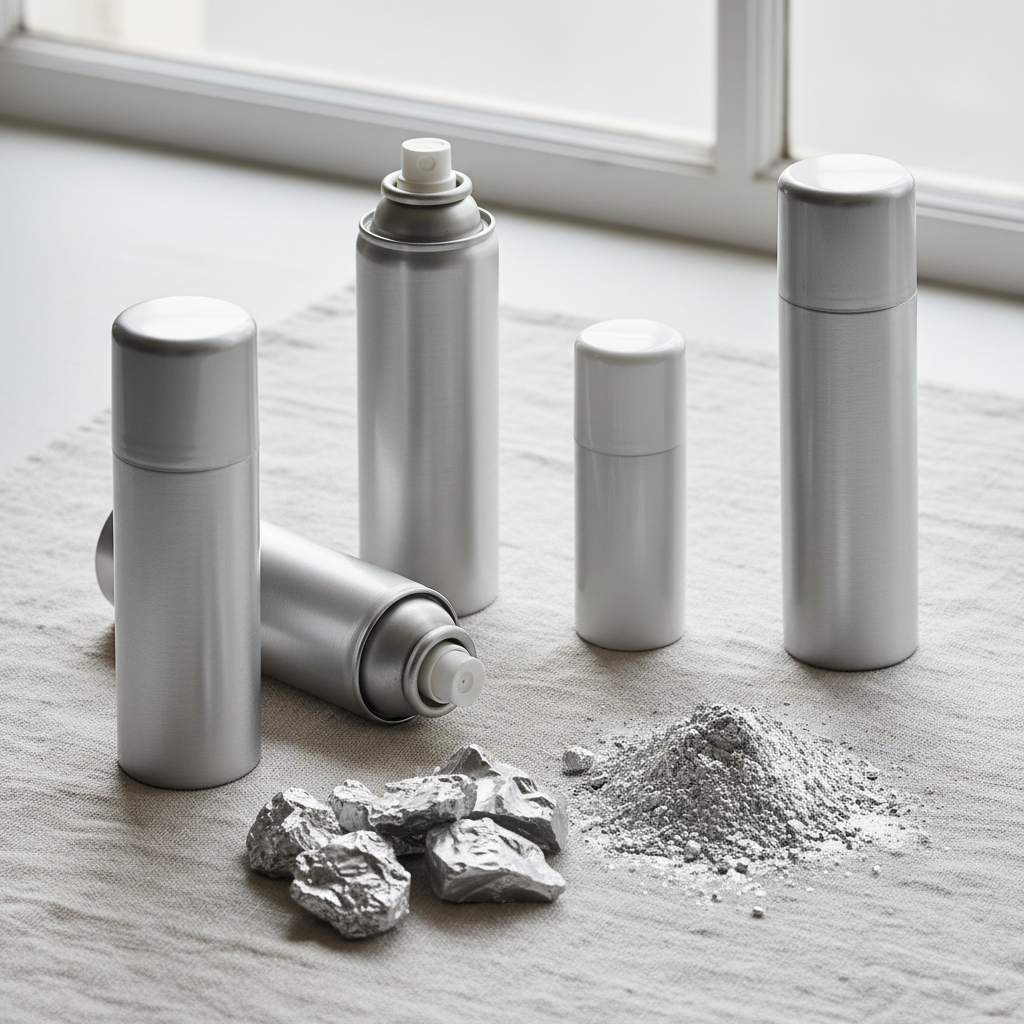
[!answer] Aluminum salts are the active ingredients in antiperspirants that reduce sweat. They work by dissolving in moisture on the skin to form a temporary gel, creating a plug in the sweat duct. Based on very low skin absorption rates, major regulatory bodies consider them safe for use in cosmetics for most healthy adults.
For decades, aluminum in antiperspirants has been the subject of intense debate, caught between assurances from regulatory science and persistent concerns within the wellness community. Understanding the real data on how these ingredients work and what they do in the body is key to navigating the noise and making an informed choice.
What are aluminum salts and how do they stop sweat?
Aluminum salts are the primary active ingredients that make an antiperspirant different from a deodorant. While deodorants work by masking or neutralizing the odor caused by bacteria breaking down sweat, antiperspirants work to physically reduce the amount of sweat that reaches the skin surface. The most common compounds used are aluminum chlorohydrate and aluminum zirconium tetrachlorohydrex gly, which are listed under the "active ingredients" section on a drug facts label in the U.S.
The mechanism is a simple matter of chemistry. When you apply antiperspirant, these aluminum salts dissolve in the sweat or moisture present on your skin. This process forms a gel-like substance that creates a shallow, temporary plug within the sweat duct. This plug physically blocks the sweat from being released onto the skin surface. It is not permanent; the plugs are naturally cleared away over time through the normal process of skin cell shedding.
Scientific methods, like infrared thermal imaging, can be used to precisely measure the surface temperature of the skin to see how effectively an antiperspirant is working [1]. By visualizing the changes in perspiration, researchers can objectively evaluate how well these aluminum-based products reduce sweat output, confirming the efficacy of this plugging mechanism.
Why is regulating sweat physiologically important?
Regulating sweat is crucial because perspiration is a primary, vital mechanism for human thermoregulation—the process of maintaining a stable core body temperature [1]. When your body temperature rises, whether from exercise, a hot environment, or a fever, your millions of sweat glands release sweat. As this moisture evaporates from your skin, it creates a cooling effect. Without this process, we would be dangerously susceptible to overheating.
Given this essential function, it’s reasonable to question the safety of blocking it, even partially. However, using antiperspirant on your underarms affects a very small percentage of your body’s total sweat glands. The armpits contain a high concentration of apocrine glands, which produce the thicker sweat associated with body odor, but they only account for a tiny fraction of the body’s total surface area for cooling. The rest of the body’s sweat glands can easily compensate to manage overall body temperature.
For most healthy individuals, this localized blocking of sweat poses no risk to overall thermoregulation. The concern is more significant for individuals with pre-existing conditions that impair temperature control, such as certain neuropathies or Parkinson's disease, where thermoregulatory dysfunction is a recognized symptom linked to a poorer quality of life [2]. In these specific cases, a physician should be consulted, but for the general population, underarm antiperspirants do not pose a threat to the body’s ability to cool itself.
[!quote] In humans, perspiration regulates core body temperature. Therefore, objectively evaluating it is essential for studying sweat gland function and mechanisms... — [1]
Does aluminum in antiperspirants cause cancer or Alzheimer's disease?
No definitive scientific evidence has established a causal link between the use of aluminum-containing antiperspirants and the development of breast cancer or Alzheimer's disease. These concerns, while widespread, are not supported by the vast majority of available research and the positions of major public health organizations, including the National Cancer Institute and the Alzheimer's Association.
The breast cancer theory originated from the observation that many women apply antiperspirant near the breast and that aluminum has been detected in breast tissue. Some lab studies (in vitro) have suggested aluminum could have estrogen-like effects, a hormone that can promote the growth of some breast cancer cells. However, multiple large-scale epidemiological studies have found no clear increase in breast cancer risk among antiperspirant users. The small amount of aluminum absorbed through the skin is not considered sufficient to have a meaningful hormonal effect on breast tissue.
The concern regarding Alzheimer's disease emerged in the 1960s when autopsies revealed elevated levels of aluminum in the brains of some Alzheimer's patients. This led to the hypothesis that aluminum exposure from various sources, including antiperspirants, cookware, and water, could be a risk factor. However, extensive research since then has failed to establish a causal relationship. It remains unclear if the aluminum present is a cause of the disease or a consequence of the neuronal changes it causes. Today, most experts believe that age and genetics are the most significant risk factors for Alzheimer’s.
What about nanoparticles and endocrine disruption?
Modern concerns about aluminum have shifted towards the nuance of particle size and hormonal effects. The debate now often centers on nanoparticles—ultra-fine particles that, due to their small size, may have different properties than their larger counterparts. The concern is that nanoparticles of aluminum salts could potentially be absorbed more readily by the skin, leading to greater systemic exposure. This has raised questions about potential impacts on various bodily systems, including reproductive health [5].
This has also renewed focus on whether aluminum can act as an endocrine disruptor. A metalloestrogen is a metal or metal-like compound that can mimic or interfere with the body's natural estrogen. While some lab studies have suggested aluminum has weak estrogenic activity, the key question is whether the dose absorbed from antiperspirants is high enough to cause an effect in the human body. If you are looking to minimize your exposure to all potential endocrine-active ingredients, it helps to know how to spot endocrine disruptors on a cosmetics label.
Current scientific consensus and regulatory review, including from the European Union's Scientific Committee on Consumer Safety (SCCS), have determined that the forms of aluminum used in cosmetics, including in nanoparticle form, are safe at their regulated concentrations. They conclude that the very low dermal absorption prevents aluminum from reaching levels in the body that would pose a health risk.
[!quote] The rapid development of nanotechnologies...has advanced concerns regarding potential health hazards...The impact of various NPs on reproductive system function is yet to be determined. — [5]
How much aluminum do we actually absorb from skin?
The amount of aluminum absorbed through the skin from antiperspirants is extremely low. Our skin is an excellent barrier, and studies have specifically measured this absorption rate. According to a comprehensive review by the EU's SCCS, the dermal absorption of aluminum is just 0.00052% when applied to healthy, intact skin. This means for every gram of product applied, only a few micrograms of aluminum might be absorbed.
It is essential to put this exposure into context. The average person consumes significantly more aluminum from their diet than they could ever absorb from cosmetics. Aluminum is the third most abundant element in the earth’s crust and is naturally present in soil, water, and many plants. As a result, it is found in fruits, vegetables, grains, and even drinking water. Processed foods, color additives, and some medications like buffered aspirin or antacids can also be major sources of dietary aluminum.
For example, you might ingest 7-9 milligrams of aluminum per day from food alone. In contrast, the amount absorbed from a daily application of antiperspirant is a tiny fraction of that. This is why regulatory agencies have consistently concluded that antiperspirants do not significantly increase the total aluminum burden in the human body.
Who might want to be more cautious?
While aluminum antiperspirants are considered safe for the general population, a few groups may want to exercise more caution. The most critical group is individuals with severely compromised kidney function. The kidneys are the primary route for eliminating aluminum from the body. When they are not working properly, aluminum can accumulate and reach toxic levels. For this reason, the FDA requires a warning on all antiperspirants advising people with kidney disease to consult a doctor before use.
People with very sensitive skin or conditions like eczema may also wish to be cautious. The action of aluminum salts plugging sweat ducts can sometimes lead to irritation, itching, or redness, known as irritant contact dermatitis. Applying antiperspirant to freshly shaved skin can exacerbate this, as small nicks and cuts can increase both irritation and absorption, though absorption still remains low overall.
Finally, there are individuals who, despite the scientific consensus, prefer to operate on a "precautionary principle" basis. They choose to avoid ingredients with any lingering safety questions or potential for unknown long-term effects. This is a personal choice, and the market now offers a wide array of effective aluminum-free deodorants.
The takeaway
For most healthy adults, aluminum-based antiperspirants are safe and effective, and the scientific evidence does not support claims that they cause major diseases like cancer or Alzheimer's. The amount of aluminum absorbed through the skin is minimal compared to what we ingest from food and water. Ultimately, the choice to use them is a personal one, weighing the established scientific consensus against individual comfort levels and skin sensitivity.
Sources
- [1] Infrared thermal imaging for assessing human perspiration and evaluating antiperspirant product efficacy. — Molly Subhash H, Ofoegbuna T, H Oliveira A, Pierce MC, Pillai S.. 2024 · Europe PMC
- [2] Thermoregulatory Dysfunction in Parkinson's Disease: Mechanisms, Implications, and Therapeutic Perspectives. — Pressnell ZS, Neilson LE, Tupone D, Pfeiffer RF, Safarpour D.. 2025 · Europe PMC
- [3] From 1D microbiological assays to 3D advanced skin models: enhancing preclinical strategies to unravel the impact of bioactive textiles on the human skin microbiome. — Negut I, Mazzanti C, Laurano R, Ciardelli G, Bronco S, Oliveira CS.. 2025 · Europe PMC
- [4] TFOS Lifestyle: Impact of cosmetics on the ocular surface. — Sullivan DA, da Costa AX, Del Duca E, Doll T, Grupcheva CN, Lazreg S, Liu SH, McGee SR, Murthy R, Narang P, Ng A, Nistico S, O'Dell L, Roos J, Shen J, Markoulli M.. 2023 · Europe PMC
- [5] Reproductive toxicity perspectives of nanoparticles: an update. — Sree BK, Kumar N, Singh S.. 2024 · Europe PMC
- [6] OpenFDA Cosmetic Adverse Event Report (#4). FDA Adverse Event Reporting System (2025) · OpenFDA