Guides
How to Spot Endocrine Disruptors on a Cosmetics Label
To spot endocrine disruptors, look for phthalates, specific parabens (propylparaben, butylparaben), and UV filters like oxybenzone and homosalate on cosmetic.
May 14, 2026
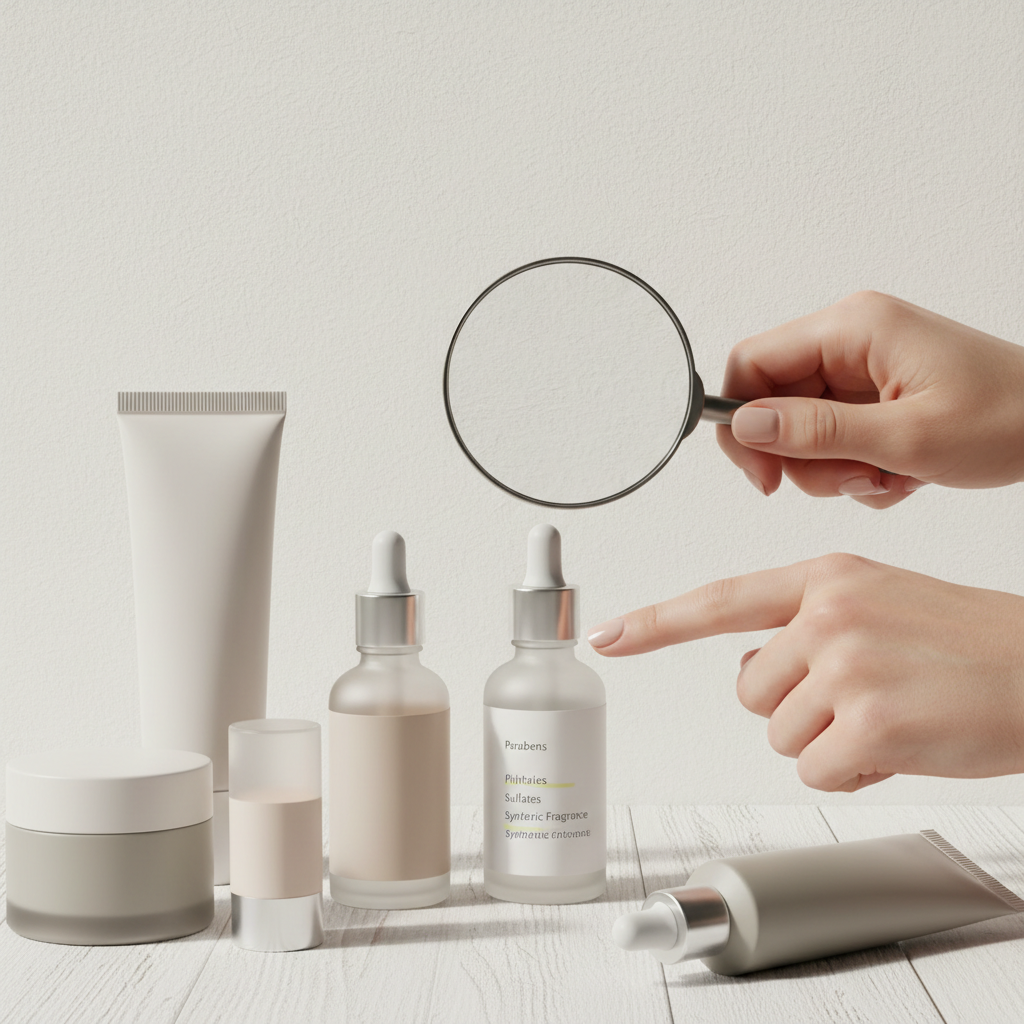
[!answer] To identify potential endocrine disruptors on an ingredient label, look for specific chemical names. Key compounds include certain parabens (e.g., propylparaben, butylparaben), phthalates (often hidden under "fragrance"), specific UV filters like oxybenzone and homosalate, and other ingredients such as resorcinol in hair dyes. Checking for "fragrance-free" can also help avoid undisclosed phthalates.
Navigating ingredient labels can feel like an exercise in chemistry, but understanding a few key terms is the first step toward making more informed choices. While the presence of a potential endocrine disruptor doesn't automatically equate to a health risk, awareness allows consumers to align their purchases with their personal comfort levels regarding scientific uncertainty and exposure.
What are endocrine disruptors?
Endocrine-disrupting chemicals, or EDCs, are substances that can interfere with the body's endocrine (or hormone) system [9]. Hormones are chemical messengers that regulate everything from metabolism and growth to mood and reproduction. An EDC can mimic a natural hormone, block its receptor, or interfere with its production, transport, or breakdown, potentially leading to adverse health outcomes [9].
Cosmetics and personal care products can contain a wide array of these chemicals, used for functions ranging from preserving the product to adding fragrance [1][7]. The concern is not typically about a single exposure but rather the cumulative effect of many small exposures from various products over a long period. This is often referred to as the "chemical body burden" [3]. While our bodies can process and excrete these substances, constant exposure may challenge these systems, particularly during sensitive life stages like pregnancy or puberty [8][9].
What does the research actually say?
The scientific evidence on EDCs is complex and evolving. Much of the research involves laboratory studies (in vitro) or animal models, which provide crucial clues about how a chemical might affect human cells but don't always translate directly to human health outcomes at real-world exposure levels [5]. Some of the most-studied EDCs in cosmetics include phthalates, parabens, and certain UV filters [1].
Studies have detected these chemicals in consumer products and in human biomonitoring samples, confirming that exposure is widespread [1][2]. Research has explored links between these exposures and various health concerns, including reproductive issues, thyroid dysfunction, and certain types of cancer [7][4]. However, establishing a direct causal link is difficult. Humans are exposed to a complex mixture of chemicals from many sources—including food packaging, cleaning supplies, and air—making it hard to isolate the effect of a single ingredient in a single product [3].
Which ingredients should I look for on a label?
Identifying potential EDCs requires reading the full ingredient list, as they are not always flagged. Here are some of the most common classes of compounds to be aware of.
Phthalates: These are used to make plastics more flexible and as solvents in fragrances. You often won't see "phthalate" on a label. Instead, look for acronyms like DBP (dibutyl phthalate) or DEP (diethyl phthalate). More commonly, they are hidden within the generic term "fragrance" or "parfum." Choosing fragrance-free products is one of the most effective ways to reduce phthalate exposure from cosmetics [1]. For those concerned about exposure during pregnancy, we have a more detailed article on phthalates and personal care.
Parabens: Used as preservatives to prevent the growth of bacteria and mold, parabens have been a cornerstone of cosmetic formulation for decades [6]. The most common are methylparaben, propylparaben, butylparaben, and ethylparaben. While the FDA and other regulatory bodies generally consider them safe at the low levels used in cosmetics, some studies have raised concerns about their potential to mimic estrogen. Propylparaben and butylparaben appear to have stronger estrogenic activity than their shorter-chain counterparts [7].
UV Filters: Certain chemicals used in sunscreens to absorb ultraviolet light have come under scrutiny. Oxybenzone (Benzophenone-3), octinoxate (Ethylhexyl Methoxycinnamate), and homosalate are frequently cited for their potential to disrupt endocrine function in lab studies [5]. These ingredients are absorbed through the skin into the bloodstream, and their safety, particularly for vulnerable populations, is an area of active research. If you're looking for sunscreens for children, you might be interested in our deep dive on homosalate and octocrylene in kids' sunscreens.
Resorcinol: This chemical is commonly found in permanent hair dyes and some acne treatments. It has been linked to thyroid dysfunction, particularly in occupational settings like hairdressing where exposure is high and consistent [4]. Reports from the FDA's Adverse Event Reporting System also include cases of hair dye-related reactions, although these don't isolate the specific ingredient responsible [10].
Why is "fragrance" a red flag?
The term "fragrance," "parfum," or "aroma" on an ingredient list is protected as a trade secret under U.S. law. This means companies are not required to disclose the individual chemicals that make up a particular scent. A single fragrance can be a cocktail of dozens or even hundreds of chemicals, including potential endocrine disruptors like phthalates (used to make the scent last longer) and synthetic musks [1][3].
[!quote] "Fragrance" was present in 96.6% of all products... The most common potentially endocrine-disrupting or asthma-associated chemicals not listed on the label but detected in products were diethyl phthalate (a fragrance solvent/fixative)... — [1]
This lack of transparency makes it impossible for a consumer to fully vet a product's safety profile if "fragrance" is on the label. Opting for products explicitly labeled "fragrance-free" is a more reliable strategy than choosing "unscented," as unscented products may use masking fragrances to cover the chemical smell of other ingredients. Other fragrance components, like benzyl salicylate, are also studied for their weak endocrine effects but are currently considered safe at typical use levels.
Are "natural" or "organic" products automatically safer?
Not necessarily. Terms like "natural," "clean," and "green" are marketing terms that have no regulated definition in the cosmetics industry. A product can be labeled "natural" and still contain synthetic chemicals or potential EDCs [6]. Similarly, while certified organic products must adhere to strict standards about agricultural ingredients, the certification may not apply to every ingredient in the final formulation.
Instead of relying on unregulated marketing buzzwords, it's more effective to either read the ingredient list yourself or look for trusted third-party certifications. To learn how to tell a meaningful seal from a marketing one, you can reference our guide to verifying organic and natural cosmetic certifications. This practice empowers you to make decisions based on defined standards rather than ambiguous claims.
Who should be most cautious?
While reducing unnecessary chemical exposure is a valid goal for anyone, certain groups may want to be more mindful. The endocrine system is particularly active and vulnerable during specific life stages. This includes pregnancy, infancy, childhood, and puberty [8][9].
[!quote] Despite the wide use of EDCs in daily products like plastics, personal care items, and food packaging, public awareness remains low. Pregnant women and new mothers are particularly vulnerable, as exposure to EDCs during early life stages can have long-term health impacts. — [9]
Studies also show that product use, and therefore exposure, is not evenly distributed across the population. Women generally use more personal care products than men [8]. Furthermore, research has found that products marketed to women of color, such as hair relaxers and skin lighteners, often contain a higher prevalence of potentially hazardous chemicals, including EDCs [2]. This creates an environmental justice issue where the health burden may fall disproportionately on specific communities.
The takeaway
Identifying potential endocrine disruptors is about reading labels with a discerning eye, not with alarm. Focus on key ingredients like phthalates (often hidden in "fragrance"), certain parabens, and specific UV filters. When in doubt, simplifying your routine and choosing products with shorter, more transparent ingredient lists is a powerful, practical step toward reducing your overall chemical exposure.
Sources
- [1] Endocrine disruptors and asthma-associated chemicals in consumer products. — Dodson RE, Nishioka M, Standley LJ. Environmental health perspectives (2012) · PubMed
- [2] Chemicals of concern in personal care products used by women of color in three communities of California. — Johnson PI, Favela K, Jarin J. Journal of exposure science & environmental epidemiology (2022) · PubMed
- [3] An Informatics Approach to Evaluating Combined Chemical Exposures from Consumer Products: A Case Study of Asthma-Associated Chemicals and Potential Endocrine Disruptors. — Gabb HA, Blake C. Environmental health perspectives (2016) · PubMed
- [4] Occupational Exposure to Resorcinol and Thyroid-Disrupting Effects: Protocol for an Exploratory Field Study in French Hairdressers. — Radauceanu A, Cambrai-Erb A, Adet B, Nioule MI, Denis F, Pons R.. 2026 · Europe PMC
- [5] Thyroid disrupting effects of exposure to sunscreens: in vitro and in vivo evidence of the impact of organic UV-filters. — Greco A, Franchi E, Denegri M, Ambrosino S, Magri F, Coperchini F, Rotondi M.. 2025 · Europe PMC
- [6] Risk perception of personal care products: A scoping review of knowledge translation strategies in environmental health. — Diyab R, De Michino G, Yousufzai SJ, Barakat C.. 2025 · Europe PMC
- [7] The dark side of beauty: an in-depth analysis of the health hazards and toxicological impact of synthetic cosmetics and personal care products. — Alnuqaydan AM.. 2024 · Europe PMC
- [8] Gender, self-care and toxic exposures: a narrative review of personal care product use and health equity implications. — Prifti E, El-Osta A.. 2025 · Europe PMC
- [9] Awareness and Knowledge of Endocrine-Disrupting Chemicals Among Pregnant Women and New Mothers: A Cross-Sectional Survey Study. — Okman E, Yalçın SS.. 2024 · Europe PMC
- [10] OpenFDA Cosmetic Adverse Event Report (#1). FDA Adverse Event Reporting System (2017) · OpenFDA