Ingredients
Are Homosalate & Octocrylene Safe in Kids' Sunscreens
This article reviews the safety of homosalate and octocrylene in kids' spray sunscreens, citing concerns about systemic absorption and endocrine disruption.
May 12, 2026
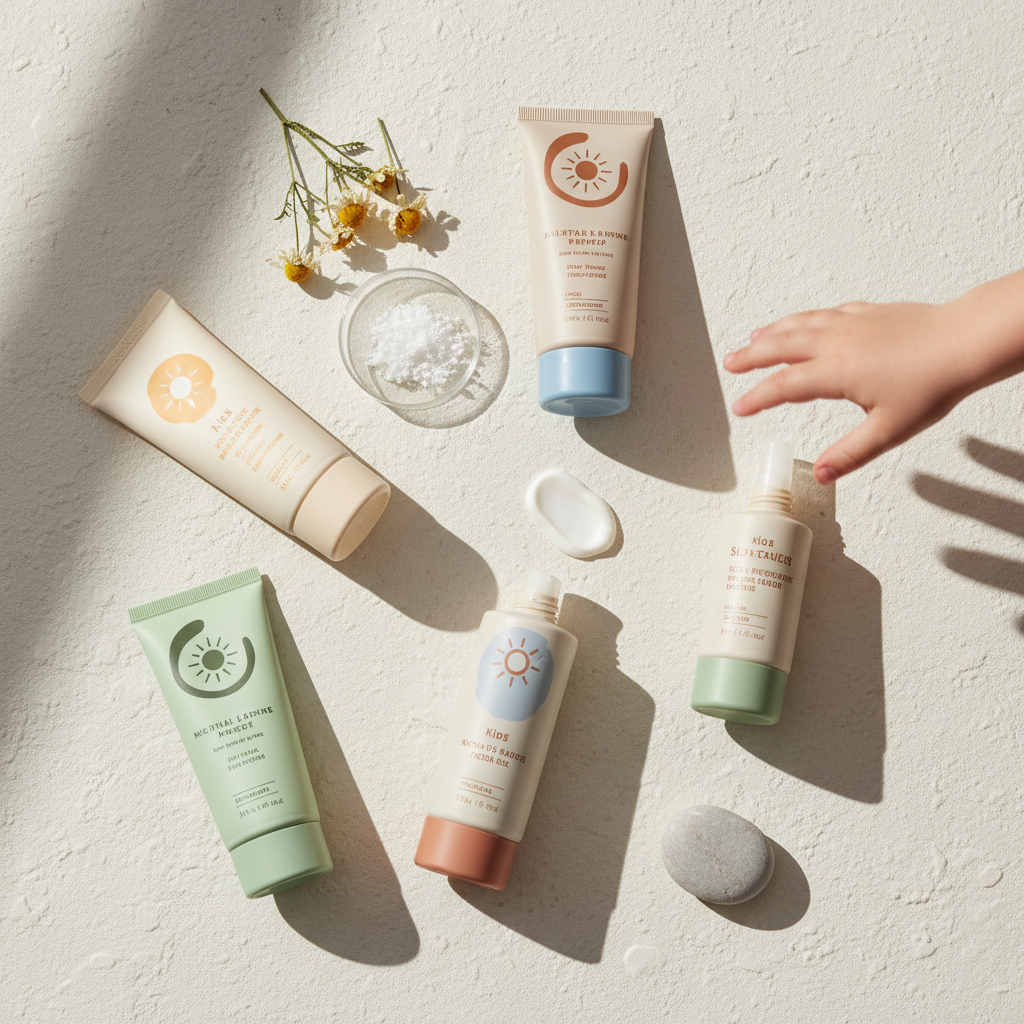
[!answer] Homosalate and octocrylene are chemical UV filters common in pediatric sunscreens. While deemed safe at current U.S. concentrations, ongoing reviews cite potential endocrine effects and systemic absorption. Health bodies like the American Academy of Pediatrics often recommend mineral sunscreens (zinc oxide, titanium dioxide) for children as a more cautious approach.
Walking down the sunscreen aisle, the brightly colored bottles emblazoned with cartoons and "tear-free" promises seem to offer a simple choice for protecting your child. But the trust we place in “pediatric-friendly” labels may warrant a closer look. The science of sun protection, especially for children, is nuanced, and the ingredients inside the bottle matter most.
What Are Homosalate and Octocrylene?
Homosalate and octocrylene are organic chemical compounds used as ultraviolet (UV) filters in sunscreen. They belong to a class of ingredients known as "chemical sunscreens" because of how they work. When applied to the skin, they absorb incoming UV radiation, primarily in the UVB spectrum responsible for sunburn, and convert it into a small amount of heat, which is then released from the skin.This mechanism contrasts with mineral sunscreens, like zinc oxide and titanium dioxide, which form a physical barrier on the skin to reflect and scatter UV rays.
These two ingredients are particularly prevalent in spray and lotion formulas prized for their cosmetically elegant feel. They are colorless, odorless oils that dissolve well with other ingredients, allowing for lightweight, non-greasy products that are easy to apply and rub in without leaving a white cast. This is especially desirable in pediatric products, where ease of application on a squirming child is a major selling point for parents.
Why Are These Ingredients Being Re-evaluated?
The conversation around homosalate and octocrylene centers on two main areas of scientific inquiry: systemic absorption and the potential for endocrine disruption. When you apply sunscreen, some of the ingredients can be absorbed through the skin into the bloodstream. The FDA has confirmed that several chemical filters, including homosalate and octocrylene, are absorbed systemically at levels that warrant further safety testing.
This absorption is significant because in-vitro (lab) and animal studies have suggested that homosalate may have weak hormonal effects. Similarly, octocrylene has come under scrutiny not only for its own potential effects but because it can degrade over time into benzophenone, a compound linked to estrogenic activity and potential skin allergies. While the levels of absorption and the potency of any hormonal effects in real-world use are still under active investigation, these preliminary findings have prompted both regulatory bodies and independent health organizations to take a more cautious stance, especially for vulnerable populations like children.
[!quote] There is often a notable disconnect between the ingredients found in sunscreens marketed for children and the recommendations provided by pediatric health organizations. — [1]
What Does Research on Pediatric Sunscreens Show?
The key concern is not just the presence of these ingredients, but their prevalence in products specifically marketed as being for children. A 2023 study published in Cureus investigated this very issue and found a significant gap between marketing claims and the recommendations of healthcare professionals [1]. Researchers cataloged sunscreens from major retailers and found that many products featuring "pediatric-marketed" labels—using words like "kids," "baby," or "pediatric"—contained chemical filters like homosalate and octocrylene.
This is noteworthy because major health bodies, including the American Academy of Pediatrics (AAP) and the American Academy of Dermatology (AAD), have increasingly guided parents toward using mineral-based sunscreens on children over six months old [1]. The rationale is one of caution: a child’s skin is thinner and has a higher surface-area-to-body-weight ratio, potentially increasing their proportional absorption of topical ingredients. Given the unresolved questions around the long-term effects of absorbed chemical filters, many experts advocate for sticking with the two mineral filters—zinc oxide and titanium dioxide—that the FDA currently recognizes as Generally Recognized as Safe and Effective (GRASE).
Do "Kid-Friendly" Labels Mean a Product is Safer?
Unfortunately, labels like "for babies" or "pediatrician-recommended" do not guarantee a specific formulation. The study on pediatric sunscreen marketing highlights that these terms are largely unregulated, creating a confusing landscape for parents [1]. The presence of a cartoon character or a gentle-sounding name on the front of the bottle has no legal bearing on the active ingredients listed on the back. It’s a marketing strategy designed to drive consumer behavior, and it’s effective.
This gap between marketing and formulation can create a false sense of security. Parents who are actively trying to make a cautious choice may be misled into purchasing a product that contains the very ingredients they might prefer to avoid. This underscores a broader theme in the cosmetics world: consumers must become adept at reading labels. Much like scrutinizing food labels, understanding how to verify organic & natural cosmetic certifications and, most importantly, reading the "Active Ingredients" list on a sunscreen’s Drug Facts panel is the only reliable way to know what’s inside.
Are Allergic Reactions a Concern?
Overall, sunscreen allergies are uncommon, but they can occur. For some individuals, certain chemical filters are more likely to trigger a reaction known as allergic contact dermatitis. Octocrylene has been identified in dermatological literature as a potential, albeit infrequent, contact allergen in both children and adults. Regulatory bodies like the FDA maintain public databases, such as the Adverse Event Reporting System (FAERS), where consumers and doctors can report reactions to cosmetic products, including sunscreens [2]. While these reports help regulators spot potential trends, they don’t prove that the ingredient caused the reaction.
The potential for skin reactions is another reason some dermatologists prefer mineral sunscreens for their pediatric patients. Ingredients like zinc oxide are known for being exceptionally gentle and are even used as the primary ingredient in diaper rash creams for their skin-soothing properties. Children with a history of sensitive skin or conditions like eczema may be less likely to experience irritation from simple, mineral-based formulas. The conversation around skin sensitivity and children's products often involves preservatives as well; as seen with ingredients like methylisothiazolinone, pediatric skin can be uniquely susceptible to certain triggers, making a "less is more" approach a sound strategy for many parents.
How Should I Choose a Sunscreen for My Child?
Navigating the sunscreen aisle is easier when you focus on the ingredient list rather than the front-of-bottle marketing. Based on the current guidance from leading pediatric and dermatological associations, the most straightforward approach is to opt for broad-spectrum, mineral-based sunscreens.
Start by flipping the bottle over to the Drug Facts label and looking for the "Active Ingredients." For a mineral sunscreen, you should see only Zinc Oxide, Titanium Dioxide, or a combination of both. These are the only two filters currently classified as GRASE by the FDA and are the universal recommendation for sensitive skin and for parents who wish to take the most cautious route.
Consider lotions over sprays, particularly for young children. While sprays are convenient, they pose an inhalation risk and make it difficult to ensure even, adequate coverage. The AAD recommends cream-based lotions to ensure you’re applying a thick, visible layer, and then rubbing it in. This is critical, as the "Sun Protection Factor" (SPF) rating is based on applying a much thicker layer than most people typically use. Concerns around aerosol products also extend to potential contaminants, a topic that has been highlighted in discussions around ingredients like benzene in certain beauty sprays.
The takeaway
While U.S. regulatory bodies have not forbidden the use of homosalate and octocrylene, the scientific community and pediatric health experts are signaling a clear preference for mineral alternatives for children. Unanswered questions about systemic absorption and potential hormonal effects of these chemical filters support a "better safe than sorry" approach. When choosing a sunscreen for your child, reading the active ingredients list for zinc oxide and titanium dioxide is the most reliable way to align your purchase with expert guidance.
Sources
- [1] Sunscreen Label Marketing Towards Pediatric Populations: Guidance for Navigating Sunscreen Choice. — Druml L, Ilyas AM, Ilyas EN.. 2023 · Europe PMC
- [2] OpenFDA Cosmetic Adverse Event Report (#4). FDA Adverse Event Reporting System (2025) · OpenFDA