Guides
How Often Should You Wash Your Hair? A Science-Based Guide
The ideal hair washing frequency depends on your scalp’s oil production, hair texture, and lifestyle. Daily washing is not harmful and does not cause hair loss.
April 29, 2026
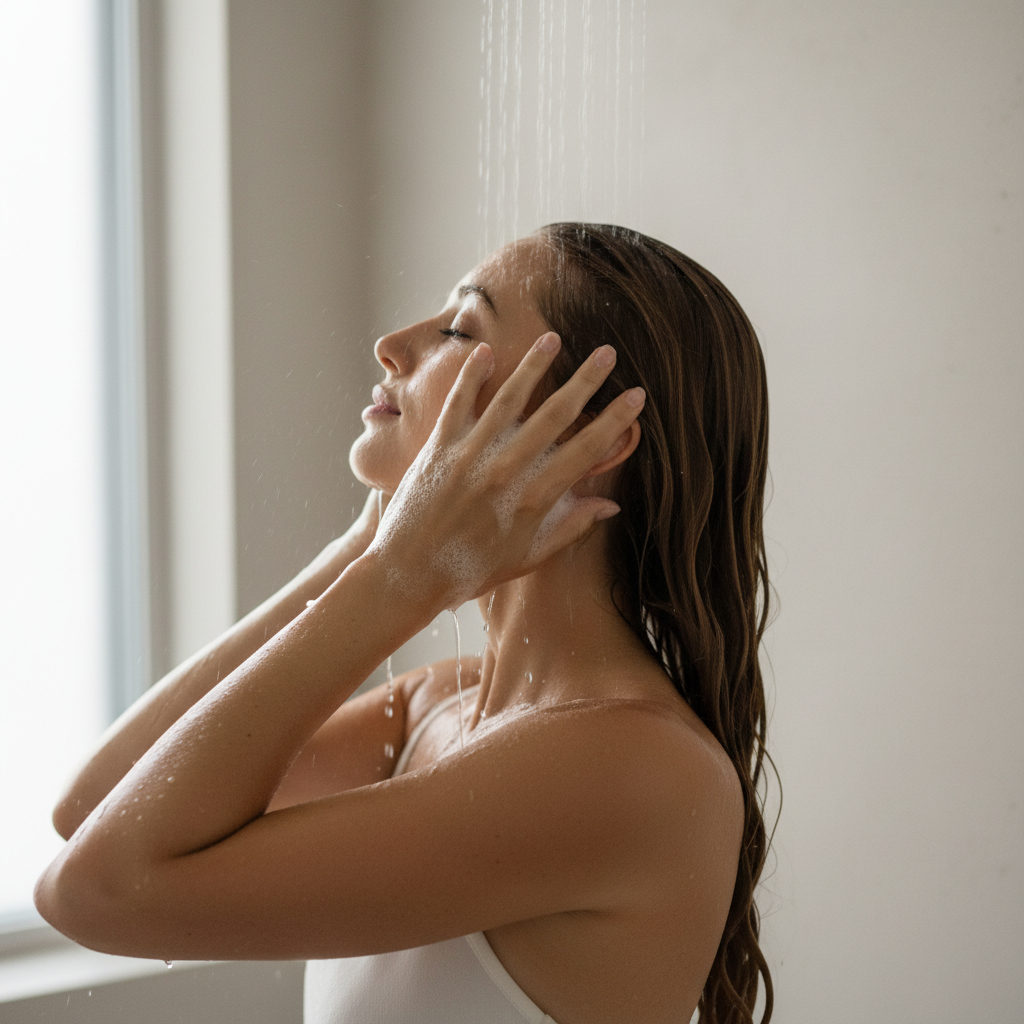
[!answer] The ideal frequency for washing your hair depends on your scalp's oil production, hair texture, and lifestyle. For most people, daily washing is not harmful and does not cause hair loss, as the hair seen in the drain has already completed its growth cycle and was ready to be shed. [1]
That last point is a crucial one, as the fear of seeing a tangled knot of hair in the shower drain is what drives much of our collective anxiety around shampooing. We’ve been conditioned to see that hair fall as a sign of damage or loss, when in fact it is most often a sign of a healthy, functioning biological process. Understanding that process is the first step to washing your hair with confidence, not fear.
How often is best to wash your hair?
There is no universal "best" frequency for hair washing. The right cadence is a matter of personal biology and preference, determined by three main factors: your scalp's sebum (oil) production, your hair's texture, and your lifestyle. If your scalp is naturally oily and your hair is fine and straight, you may feel and look best washing it daily. If you have a drier scalp and coarse, curly, or coily hair, washing once a week—or even less—might be perfectly sufficient.
Those who exercise frequently and perspire heavily may prefer to wash more often to keep their scalp clean and free of sweat buildup, regardless of their hair type. Ultimately, the goal of washing is to clean the scalp of excess oil, sweat, dead skin cells, and product residue. The frequency should be whatever is required to maintain a clean and comfortable scalp environment without stripping the hair of its necessary moisture.
Take note of how your hair and scalp feel a day or two after washing. If your roots are limp and greasy by evening, daily washing is likely a good fit. If your scalp feels tight, itchy, or flaky, you may be overwashing or using a shampoo that is too harsh. It’s an ongoing dialogue with your own body.
Will washing my hair every day make it fall out?
No, for the vast majority of people, shampooing daily will not cause or accelerate hair loss. The a common myth that more frequent washing leads to more hair shedding is based on a misunderstanding of the hair growth cycle. The hair you see in the drain was not "pulled out" by the act of washing; it was already detached from the follicle and ready to go. [1]
Human hair grows in a three-phase cycle. The anagen (growth) phase lasts for several years. It's followed by the brief catagen (transitional) phase, where the follicle shrinks. Finally, the hair enters the telogen (resting) phase, which lasts for about three to four months. During the telogen phase, the hair shaft is no longer growing and sits dormant in the follicle until it is finally pushed out by a new anagen hair growing in beneath it. At any given time, about 10-15% of your hairs are in this shedding phase.
[!quote] That hair you see in your drain or on your brush was already in the last phase of its life cycle. Washing your hair simply dislodges it. — [1]
Each day, it's normal to shed between 50 and 100 telogen hairs. When you don't wash your hair for a few days, those shed hairs remain loosely trapped among the rest of your hair. The next time you shampoo, the accumulated total comes out all at once, which can look alarming. A daily washer sees a smaller, more consistent amount of shedding with each wash, while a less frequent washer sees more shedding on wash days because it represents several days' worth of natural hair fall.
What should I look for when choosing a shampoo?
You should choose a shampoo based on the needs of your scalp, not your hair strands. Think of shampoo as skincare for your scalp. If you have an oily scalp, you'll need a formula with stronger cleansing agents (like sodium lauryl sulfate) to effectively remove excess sebum. If you have a dry or sensitive scalp, look for milder, sulfate-free formulas that cleanse more gently. Some people also find their scalp is sensitive to certain preservatives, and may want to patch-test new products if they are prone to irritation or have experienced issues with ingredients like methylisothiazolinone in the past.
Conditioner, by contrast, is for your hair. Its purpose is to hydrate, smooth the hair's cuticle, reduce friction, and improve manageability. You should choose a conditioner based on your hair's type, texture, and condition—for instance, a lightweight formula for fine hair, a rich, moisturizing one for coarse or dry hair, or a protein-based treatment for chemically damaged hair.
In most cases, shampoo should be concentrated on the scalp, where oil and debris accumulate. As you rinse, the lather will run down the lengths of your hair, which is sufficient to clean them without the need for vigorous scrubbing. Conditioner should then be applied primarily from the mid-lengths to the ends, where hair is the oldest and most in need of moisture and repair, avoiding the scalp where it can weigh hair down and contribute to greasiness.
Is there a “right” technique for washing hair?
While frequency is personal, a gentle technique is universal. Start with lukewarm water, as very hot water can strip the scalp and hair of natural oils, potentially leading to dryness or rebound oil production. Apply a quarter-sized amount of shampoo to your palms and work it into a lather before applying it to your scalp.
Using the pads of your fingers (not your nails), gently massage the shampoo into your scalp with circular motions for a minute or two. This helps to lift oil and debris while also stimulating circulation. There’s no need to scrub aggressively or pile all your hair on top of your head, which can create tangles and friction damage. Let the suds run down the length of your hair, as this is usually enough to cleanse the strands.
After rinsing the shampoo thoroughly, squeeze the excess water from your hair before applying conditioner. Focus the product on the mid-lengths and ends, carefully detangling with your fingers or a wide-tooth comb while the conditioner is still in. This is the safest way to detangle, as the "slip" from the conditioner minimizes friction and reduces breakage. Let the conditioner sit for a few minutes before rinsing with cool water to help seal the hair cuticle, which promotes shine and smoothness.
What about using dry shampoo on non-wash days?
Dry shampoo can be an excellent tool for managing scalp oil and refreshing your style between washes. It works by using starches or clays to absorb excess sebum, making hair look and feel cleaner while adding volume. However, it is not a replacement for washing your hair. Dry shampoo absorbs oil; it doesn’t actually clean the scalp.
Over-reliance on dry shampoo can lead to problems. The fine powders can build up on the scalp, mixing with oil and skin cells to potentially block follicles or cause irritation. This buildup can lead to itching, flakiness, or even inflammation (folliculitis) if left for too long. For this reason, it's best used for one or two days at a time, not for a week straight. When you are using it, it's important to know the right way to apply it and to ensure you are eventually washing it out thoroughly. For anyone who uses it regularly, following specific best practices is key to using it without damaging your hair.
The takeaway
Listen to your scalp and hair to find the washing frequency that works for you. Do not fear the normal shedding you see in the shower; it is a healthy part of your hair's natural life cycle, not a sign of damage from washing. Choosing products targeted to your scalp’s needs and handling your hair gently are the cornerstones of a truly effective cleansing routine.
Sources
- [1] I like to wash my hair every day. Does doing so cause more hair loss than if I washed it less frequently?. Mayo Clinic health letter (English ed.) (2000) · PubMed