Ingredients
Methylisothiazolinone: Safety in Rinse-Off vs. Leave-On Products
Methylisothiazolinone is a preservative and known skin allergen. Due to this, the EU has banned it in leave-on lotions but permits it in rinse-off shampoos.
May 25, 2026
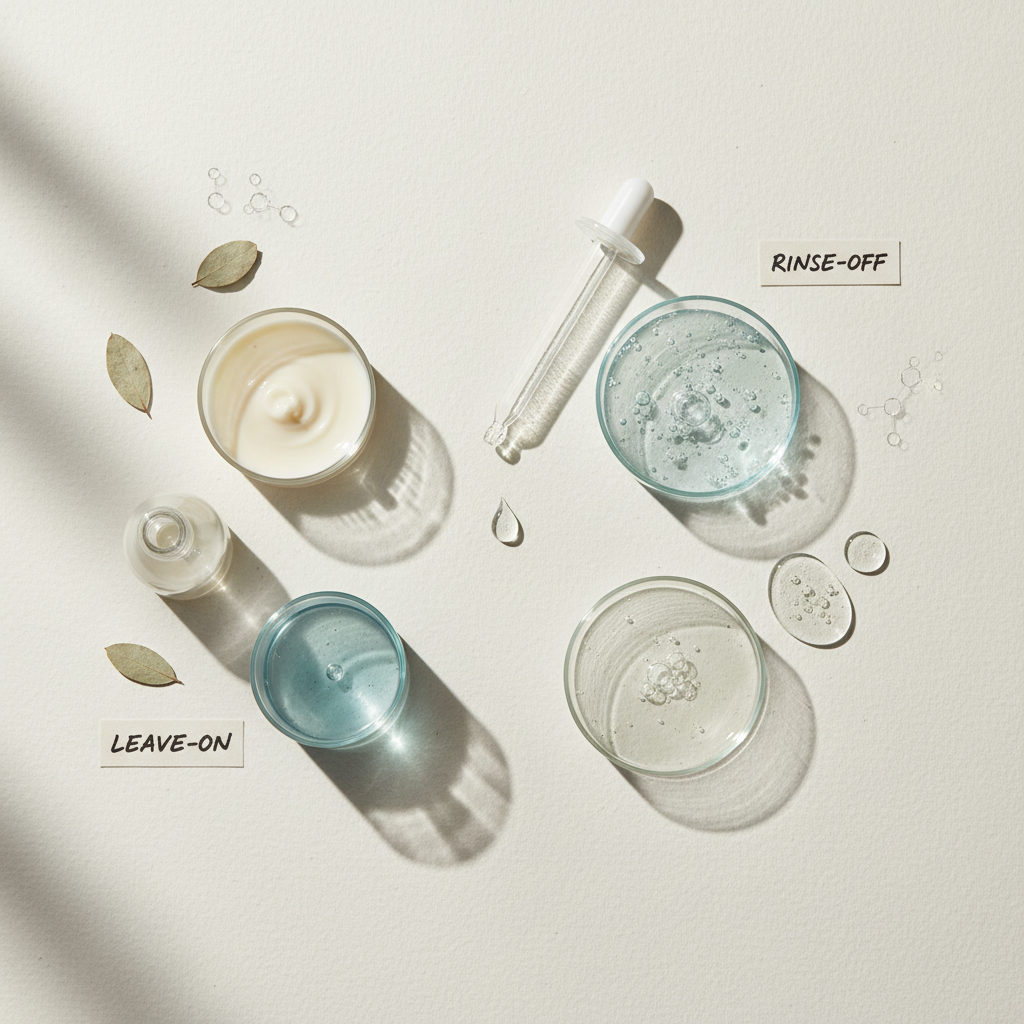
[!answer] Methylisothiazolinone (MI) is a preservative that effectively prevents microbial growth in water-based cosmetics. However, it is also a potent skin allergen. Consequently, regulators in the EU and other regions have banned it from leave-on products like lotions while permitting it at low, controlled concentrations in rinse-off formulas like shampoos, where the risk is considered minimal.
This simple preservative tells a complex story about risk, exposure, and the ever-evolving nature of cosmetic safety. Once a go-to solution for keeping products free of contamination, methylisothiazolinone became the leading cause of contact allergy to preservatives, prompting a swift regulatory response that fundamentally changed how it could be used. The result is a nuanced landscape where a single ingredient can be considered safe in one bottle but not in another.
What is methylisothiazolinone?
Methylisothiazolinone, often abbreviated as MI, is a powerful biocide used as a preservative in a wide range of consumer products. It belongs to a chemical class known as isothiazolinones, which are highly effective at killing a broad spectrum of microorganisms, including bacteria, fungi, and yeast. Its primary job in a cosmetic formula is to prevent the product from becoming contaminated after opening, extending its shelf life and protecting the consumer from potentially harmful pathogens that can thrive in water-based creams, lotions, and cleansers [1].
For many years, MI was most commonly used in a mixture with a related preservative, methylchloroisothiazolinone (MCI). You will often see this combination listed on ingredient labels as MCI/MI. In the 2000s, driven by a search for alternatives to other preservatives like parabens and formaldehyde-releasers, manufacturers began using MI on its own, often at higher concentrations than were used in the traditional MCI/MI blend. This shift had unintended consequences, leading to a decade-long saga of skin reactions that caught the attention of dermatologists and regulators worldwide [2].
Why did it become so controversial?
MI’s fall from grace was a direct result of its effectiveness as an allergen. Between roughly 2005 and 2015, dermatologists around the globe noted a dramatic and alarming increase in the number of patients developing allergic contact dermatitis (ACD) to MI [1][2]. Patch testing, the diagnostic standard for identifying contact allergens, confirmed that MI was the culprit in a growing "epidemic" of skin sensitization. It was named the American Contact Dermatitis Society
How does methylisothiazolinone cause an allergic reaction?
Methylisothiazolinone (MI) triggers an allergic reaction through a process known as allergic contact dermatitis, which is a delayed Type IV hypersensitivity response. Unlike an instant allergy, this reaction develops over 24 to 72 hours after exposure. MI is a small molecule called a hapten. On its own, it's too small to be recognized by the immune system, but once it penetrates the skin, it binds to the body’s own proteins. This creates a new, larger complex that immune cells, specifically T-cells, mistakenly identify as a foreign threat.
The development of the allergy occurs in two distinct phases. The first is sensitization. Upon initial contact, a person will not experience a rash. Instead, their immune system is quietly being programmed. Specialized immune cells in the skin process the MI-protein complex and present it to T-cells, which learn to recognize it. This creates a long-term "memory" for the allergen. Any subsequent exposure then triggers the second phase, known as elicitation. The memory T-cells recognize the MI-protein complex and release inflammatory chemicals called cytokines, which cause the characteristic symptoms of contact dermatitis: intense itching, redness, swelling, and sometimes blistering at the site of contact.
Because of this two-step mechanism, a person can use a product containing MI for weeks, months, or even years without any issue. The sensitization phase can be gradual, and it is only after that threshold is crossed that the allergy reveals itself. Once a person is sensitized to MI, the allergy is typically lifelong, and even minuscule amounts of the substance in rinse-off products can be enough to trigger a significant and uncomfortable rash upon future contact.
Who should be most cautious about this ingredient?
The group that must be most vigilant is anyone with a confirmed MI allergy diagnosed by a dermatologist through patch testing. For these individuals, there is no safe level of exposure. Even the low concentrations permitted in rinse-off products like shampoos and body washes can be sufficient to cause a severe dermatitis flare-up, not just on the area of direct application (like the scalp) but potentially on the face, hands, and torso as the product runs down the body during rinsing.
Beyond those with a diagnosed allergy, individuals with compromised skin barriers are at higher risk of developing a sensitization to MI in the first place. This includes people with chronic skin conditions like atopic dermatitis (eczema), rosacea, or psoriasis. A damaged barrier allows allergens like MI to penetrate the skin more easily, increasing the likelihood of initiating an immune response. Therefore, those with a history of sensitive or eczematous skin should consider avoiding MI as a precautionary measure, even in rinse-off formulas.
Finally, certain occupations carry a much higher risk of exposure and subsequent sensitization. Hair stylists, beauticians, and factory workers in cosmetic or paint manufacturing handle products containing MI daily, often at higher concentrations or for prolonged durations. This increased and repeated exposure significantly elevates their risk of developing an allergy. For these professionals, using personal protective equipment like gloves and being diligent about reading ingredient and safety data sheets is critical to minimizing their risk.
How can consumers identify methylisothiazolinone on a label?
To determine if a product contains this preservative, you must meticulously read the full ingredient list, which is typically found on the back of the packaging in small print. Manufacturers are legally required to list all ingredients using a standardized naming system known as the International Nomenclature of Cosmetic Ingredients (INCI). You will not see Casual abbreviations like "MI" used on the official list.
Look for the name Methylisothiazolinone. It is often found near the end of the ingredient list, as preservatives are used in small concentrations. You should also be aware of its common partner, Methylchloroisothiazolinone. For decades, the two were used in a combined formulation. If you see Methylchloroisothiazolinone on the label, it is almost always in a mixture with Methylisothiazolinone, even if the latter is not spelled out separately. This combination is often listed as "Methylchloroisothiazolinone/Methylisothiazolinone". A person allergic to one is often advised to avoid both.
In regions like the European Union, you should no longer find Methylisothiazolinone in leave-on products like lotions, creams, wet wipes, or sunscreens. However, it is still permitted in rinse-off products. Therefore, you must remain vigilant when checking labels of shampoos, conditioners, body washes, liquid hand soaps, and some facial cleansers. If you have a known allergy, learning to scan and recognize these INCI names is the only reliable way to prevent an allergic reaction.
Sources
- [1] Contact Allergy to Ingredients of Hair Cosmetics Associated with Occupational and Non-Occupational Exposure-Trends from 1995 to 2020 in Central Europe, with or without Regulation. — Uter W, Schwensen JFB, Blömeke B, Gefeller O, John SM, Bieck C, Schubert S.. 2026 · Europe PMC
- [2] Preservatives in non-cosmetic products: Increasing human exposure requires action for protection of health. — Lidén C, Andersson N, White IR.. 2022 · Europe PMC
- [3] Repeated Vaginal Exposures to the Common Cosmetic and Household Preservative Methylisothiazolinone Induce Persistent, Mast Cell-Dependent Genital Pain in ND4 Mice. — Arriaga-Gomez E, Kline J, Emanuel E, Neamonitaki N, Yangdon T, Zacheis H, Pasha D, Lim J, Bush S, Boo B, Mengistu H, Kinnamon R, Shields-Cutler R, Wattenberg E, Chatterjea D.. 2019 · Europe PMC
- [4] Ethylzingerone, a Novel Compound with Antifungal Activity. — Rossignol T, Znaidi S, Chauvel M, Wesgate R, Decourty L, Menard-Szczebara F, Cupferman S, Dalko-Sciba M, Barnes R, Maillard JY, Saveanu C, d'Enfert C.. 2021 · Europe PMC