Guides
How to Read Cosmetic Labels for Common Skin Allergens
Decode cosmetic labels to identify common allergens like fragrance, PPD, and preservatives. Learn how to avoid skin reactions and choose safer products.
May 25, 2026
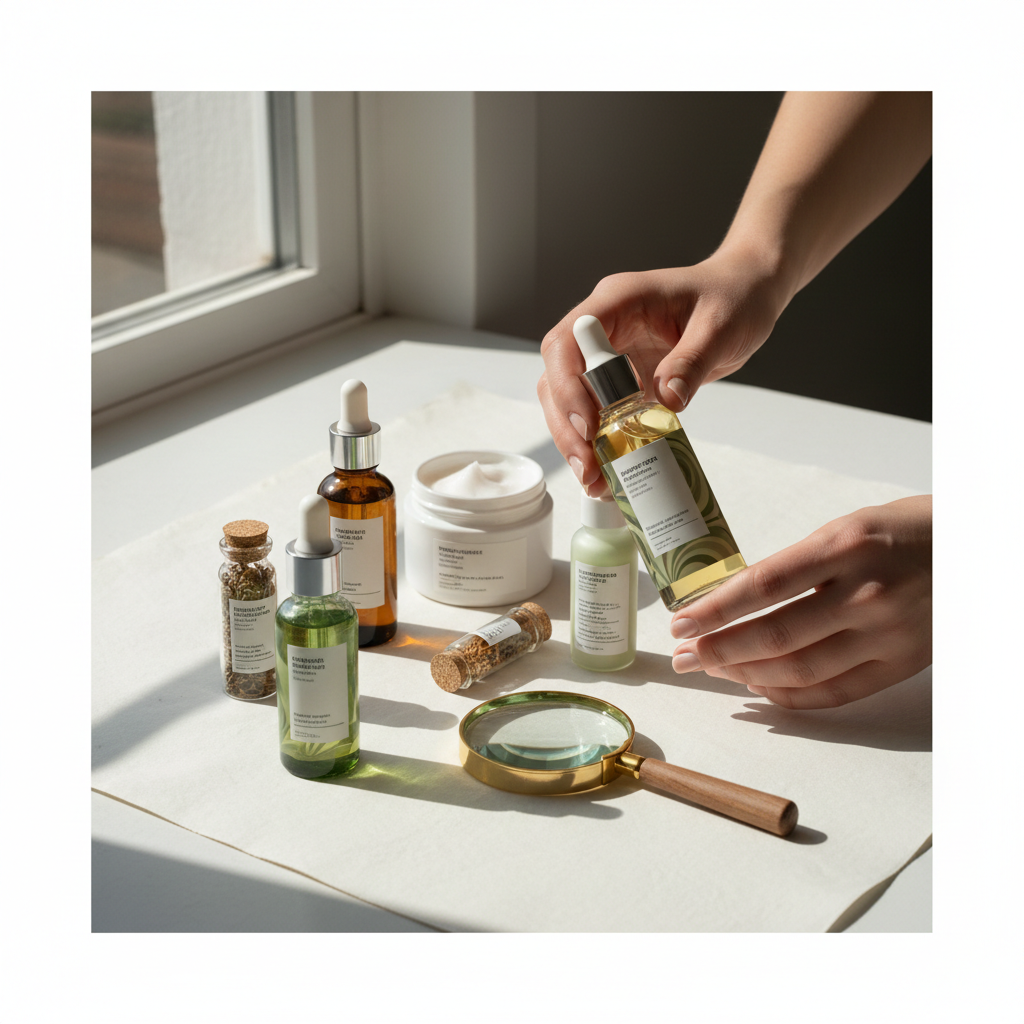
[!answer] To identify common contact allergens on a cosmetic label, look for ingredients listed under "fragrance" or "parfum," specific preservatives like methylisothiazolinone, and chemicals in hair dyes such as p-phenylenediamine (PPD). Reading the full INCI (International Nomenclature of Cosmetic Ingredients) list is essential, as even "natural" products can contain potent allergens.
Navigating ingredient lists can feel like a daunting task, especially when a single product can contain dozens of compounds. But for those with sensitive skin, understanding how to spot potential triggers is the first step toward preventing the redness, itching, and discomfort of allergic contact dermatitis. It’s not about memorizing every chemical, but learning to recognize the most common culprits.
What is allergic contact dermatitis?
Allergic contact dermatitis (ACD) is an immune system reaction that occurs when your skin comes into contact with a substance it perceives as a threat. Unlike irritant contact dermatitis, which is a direct injury to the skin caused by a harsh substance, ACD is a true allergic response. It develops after initial exposure (sensitization) and then triggers a reaction upon subsequent contact, often appearing as a red, itchy, and sometimes blistering rash 24 to 72 hours after using a product.
Identifying the specific ingredient causing the reaction is key to managing the condition. This can be challenging, as the average cosmetic product contains a complex mixture of ingredients. A survey of caregivers for children with eczema highlighted this frustration, noting the difficulty in deciphering long, complex ingredient labels and the confusion caused by marketing terms like "hypoallergenic" or "for sensitive skin," which are not regulated and offer no guarantee of safety [1]. This is why learning to read the ingredient list for yourself is such a valuable skill.
Why are fragrances the most common culprits?
Fragrance mixtures are consistently identified as one of the leading causes of allergic contact dermatitis from cosmetics. The primary issue is a lack of transparency. On an ingredient list, the single word "fragrance" or "parfum" can legally represent a proprietary blend of dozens, or even hundreds, of individual chemicals. This practice makes it nearly impossible for a consumer to know exactly what they are applying to their skin.
A 2018 study that used a smartphone app to scan over 5,500 cosmetic products found that 99% of perfumed products contained at least one known fragrance allergen [2]. In the European Union, regulations require 26 specific, well-established fragrance allergens (like Limonene, Linalool, and Geraniol) to be listed individually on the label if they exceed a certain concentration. This allows individuals with a known sensitivity to avoid them. In the United States, however, this disclosure is not consistently required, leaving consumers more vulnerable.
[!quote] Fragrance contact allergens can be categorized according to the strength of the sensitization reactions they elicit in humans and animals... — [3]
Not all fragrance ingredients pose the same risk. Researchers categorize allergens based on their potency, or how likely they are to cause a reaction [3]. Ingredients like Oakmoss Absolute and Isoeugenol are considered extreme or potent sensitizers. While many fragrance allergens are less powerful, their ubiquity means that cumulative exposure from multiple products can still be enough to trigger a reaction. For those with sensitive skin, choosing "fragrance-free" products—not "unscented," which may contain masking fragrances—is the most straightforward strategy for avoiding these potential triggers.
What preservatives should I watch out for?
Preservatives are essential for preventing the growth of bacteria, yeast, and mold in water-containing cosmetics, but they are also a well-documented source of contact allergies. Because their function is to disrupt microbial life, it is perhaps unsurprising that they can sometimes disrupt skin health as well. Some of the most notorious allergenic preservatives have been phased out of many products, but they still appear, and new culprits emerge.
The class of preservatives known as isothiazolinones, particularly methylisothiazolinone (MI) and the combination product methylchloroisothiazolinone/methylisothiazolinone (MCI/MI), are potent allergens. Once common in everything from moisturizers to shampoos, their use in leave-on products is now heavily restricted in many regions, though they may still be found in rinse-off products. A high frequency of allergenic ingredients, including preservatives, has been found even in products like antifungal creams that are meant to treat skin conditions [4].
Another category to be aware of is formaldehyde-releasers. These are preservatives that slowly release small amounts of formaldehyde to keep a product stable. Common examples include DMDM hydantoin, quaternium-15, and diazolidinyl urea. While effective, formaldehyde is a well-known allergen, and for sensitized individuals, even the low levels released by these preservatives can be enough to cause a significant reaction. If you have a known formaldehyde allergy, you should carefully scrutinize labels for these ingredients. You can also explore our guide on how to spot endocrine disruptors on a cosmetics label, as some preservatives fall into that category as well.
How do I spot allergens in hair dye?
Hair dye is one of the most common causes of severe ACD, particularly on the face, scalp, and neck. The primary allergens are aromatic amines used as developers to create permanent color. The most famous of these is p-phenylenediamine, or PPD. It is an extremely effective and widely used dye, but it is also a powerful sensitizer. A 2014 study found PPD in 76% of the permanent hair dyes it tested in the U.S. [5].
Many consumers, aware of the risks of PPD, now look for products marketed as "PPD-free." However, this label can be misleading. A 2024 study investigated so-called "PPD-free" dyes and found that they often contain other, closely related chemicals that can cross-react in PPD-allergic individuals [6]. The most common substitute, toluene-2,5-diamine sulfate (TDS), while potentially less potent, can still trigger a severe reaction in a significant portion of people allergic to PPD. To learn more, see our detailed guide on finding hidden allergens on hair dye ingredient labels.
Therefore, a "PPD-free" claim is not a guarantee of safety for someone with a hair dye allergy. It is critical to read the full ingredient list for TDS and other related compounds. If you have a known allergy, a dermatologist can perform a patch test with a specific hair dye series to identify which specific chemicals you react to, providing a definitive list of ingredients to avoid.
Are "natural" ingredients always safe?
The belief that "natural" is synonymous with "gentle" or "safe" is one of the most persistent myths in beauty. In reality, some of the most potent contact allergens are derived directly from nature. Poison ivy is a classic example, but many botanical ingredients used in cosmetics can also cause significant reactions in sensitized individuals.
Propolis, a resinous substance produced by bees, is a powerful natural remedy known for its antimicrobial properties. However, it is also a significant contact allergen. A recent market survey found it explicitly listed in a small number of cosmetic products, but concern remains about its presence as an unlisted contaminant in beeswax, another common cosmetic ingredient [7]. Individuals with a known propolis allergy may need to be cautious with products containing beeswax (cera alba) or honey.
Essential oils are another major source of natural allergens. These concentrated plant extracts are, by definition, fragrance. The very components that give them their beautiful scents—limonene, linalool, geraniol—are the same compounds that are recognized as common fragrance allergens. Many "clean" or "natural" brands that avoid synthetic "fragrance" use essential oils instead, but for someone with fragrance sensitivities, the skin may not distinguish between a linalool molecule derived from lavender or one created in a lab. Reading the label is still paramount, as is understanding where marketing ends and science begins, a skill you can hone by learning how to verify organic & natural cosmetic certifications.
What about allergens in nail products?
Allergic reactions to nail cosmetics, especially gel, acrylic, and dip powder systems, are on the rise. The primary culprits are a class of chemicals called acrylates and methacrylates. These monomers polymerize (harden) under UV light or with a catalyst to form the durable, glossy finish of a gel or acrylic manicure.
One of the most frequently cited allergens is 2-hydroxyethyl methacrylate, or HEMA. A 2024 market survey of nail products sold online found that HEMA was a very common ingredient, even in products intended for at-home use [8]. Sensitization often occurs when the uncured, liquid monomer comes into contact with the skin around the nail. This can happen from a messy application at home or in a salon. The resulting allergy can cause not only dermatitis on the fingers but also rashes on the face, neck, or eyelids—wherever a person touches with their still-uncured nails.
Once a person becomes sensitized to one acrylate, they often react to others. This can have serious future medical implications, as acrylates are used in dental fillings and surgical bone cements. If you experience itching, redness, or swelling around your nails after a manicure, it could be a sign of an emerging acrylate allergy, which warrants a discussion with your doctor or dermatologist.
The takeaway
Becoming a savvy label-reader is an act of empowerment for your skin's health. Focus on identifying the key categories of allergens—fragrance, specific preservatives like MI or formaldehyde-releasers, and hair dye chemicals like PPD and TDS—rather than trying to memorize every ingredient. Remember that "natural" and "hypoallergenic" are marketing terms, not safety guarantees, and the most reliable way to prevent a reaction is to know your triggers and diligently check the INCI list before you buy.
Sources
- [1] Perceptions of skincare ingredients and product labels in pediatric eczema care. — Zemlok SK, Bentivegna K, Torre K. Pediatric dermatology (2023) · PubMed
- [2] Fragrance contact allergens in 5588 cosmetic products identified through a novel smartphone application. — Bennike NH, Oturai NB, Müller S. Journal of the European Academy of Dermatology and Venereology : JEADV (2018) · PubMed
- [3] Categorization of fragrance contact allergens for prioritization of preventive measures: clinical and experimental data and consideration of structure-activity relationships. — Uter W, Johansen JD, Börje A. Contact dermatitis (2013) · PubMed
- [4] Frequency of Allergenic Ingredients in Antifungal Creams. — Ufkes N, Haidari W, Su J. Dermatitis : contact, atopic, occupational, drug (2021) · PubMed
- [5] p-Phenylenediamine and other allergens in hair dye products in the United States: a consumer exposure study. — Hamann D, Yazar K, Hamann CR. Contact dermatitis (2014) · PubMed
- [6] Contact Allergens in "PPD-Free" Hair Dyes. — Needle CD, Milam EC, Korman A, Flamm AF, Jones DR, Cohen DE, Karagounis TK.. 2025 · Europe PMC
- [7] Propolis and Beeswax in Cosmetics: A Market Survey and Literature Review on Their Relationship and Role in Allergic Contact Dermatitis. — de Groot AC, Ipenburg NA, Rustemeyer T.. 2026 · Europe PMC
- [8] Presence of 2-hydroxyethyl methacrylate (HEMA) and other (meth)acrylates in nail cosmetics, and compliance with EU legislation: An online market survey. — Steunebrink IM, de Groot A, Rustemeyer T. Contact dermatitis (2024) · PubMed