Ingredients
Triclosan in Toothpaste: A Guide to the Endocrine Risks
Triclosan, formerly in toothpaste, is out of US oral care products due to endocrine disruption concerns. Lab studies linked it to hormone interference.
July 28, 2026
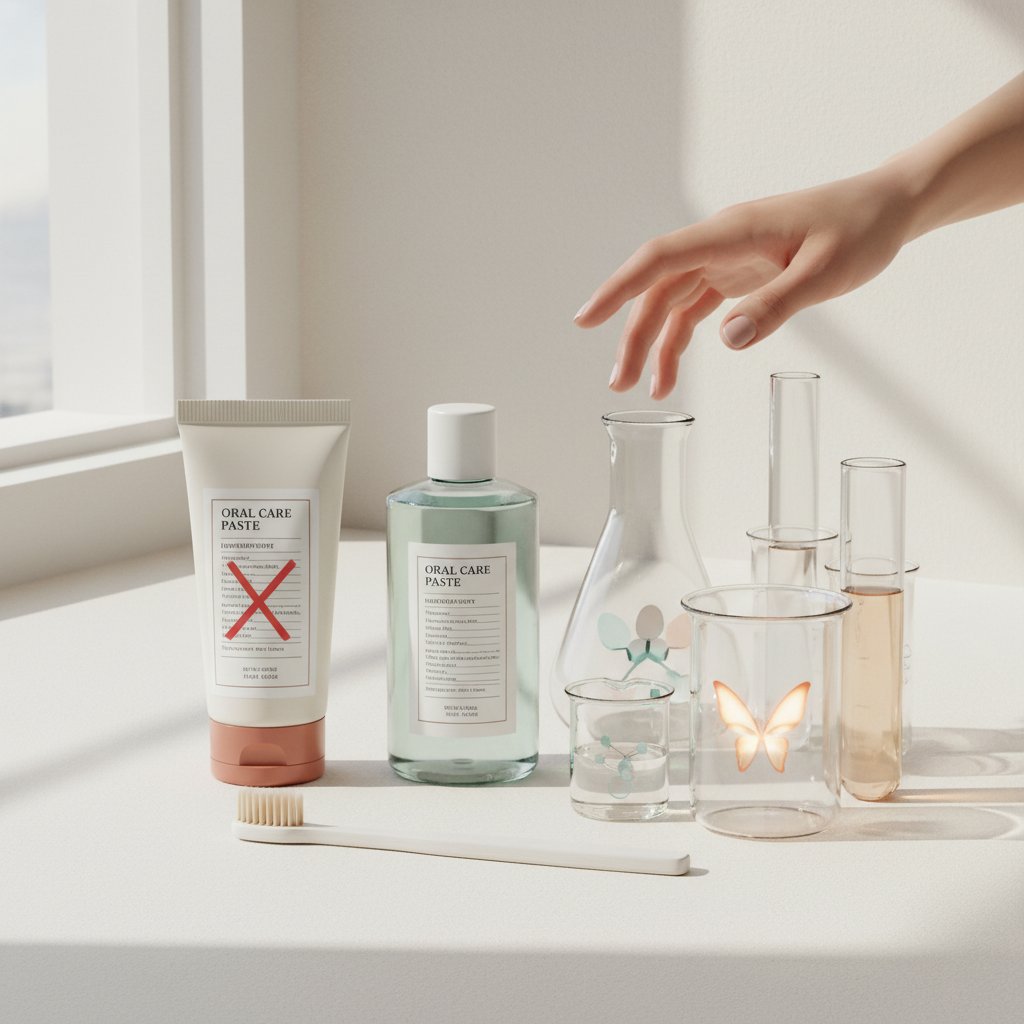
[!answer] Triclosan is an antimicrobial agent once used in toothpaste to prevent gingivitis. It has been removed from over-the-counter oral care products in the U.S. following evidence that it can act as an endocrine disruptor, potentially interfering with thyroid and reproductive hormones and impacting gut health.
For decades, triclosan was a ubiquitous ingredient, valued for its antibacterial prowess. Its removal from the market represents a major shift in regulatory thinking, highlighting the ongoing scientific conversation about the ingredients we interact with daily and their subtle, long-term effects on our bodies and the environment.
What is triclosan and why was it in toothpaste?
Triclosan is a synthetic, broad-spectrum antimicrobial agent, meaning it is effective at killing a wide variety of bacteria and fungi. Developed in the 1960s, it was first introduced as a surgical scrub in hospitals. By the 1990s, its use had expanded dramatically into consumer goods. It was added to everything from soaps and detergents to toys and, most notably, toothpaste.
In oral care products, triclosan’s purpose was to combat gingivitis, a common form of gum disease characterized by inflammation and bleeding. It accomplished this by reducing the bacterial plaque that causes the condition. For many years, Colgate Total was the most prominent example, as the FDA had approved its specific formulation in 1997 based on data showing it was effective and safe for treating gingivitis. This approval, however, came long before the more recent body of evidence on endocrine disruption came into focus.
Is triclosan still used in oral care products today?
For consumers in the United States, the answer is largely no. The story of triclosan’s exit from the marketplace happened in stages. In 2016, citing a lack of evidence for both its safety and its effectiveness over plain soap and water, the U.S. Food and Drug Administration (FDA) banned triclosan and 18 other antimicrobial chemicals from over-the-counter consumer wash products. In 2017, this ban was extended to other topical antiseptic products.
Although the ban didn’t initially cover toothpaste where a pre-market approval had been granted (like Colgate Total), the mounting scientific evidence and public pressure led to a market shift. In 2019, Colgate-Palmolive voluntarily removed triclosan from its last remaining triclosan-formulated toothpaste, effectively eliminating the ingredient from the oral care aisle in the U.S. While it may still exist in some professional healthcare settings or in products from other countries, it is no longer a standard ingredient in American consumer toothpaste.
What does the research say about triclosan and endocrine disruption?
The primary concern that led to triclosan’s fall from favor is its classification as an endocrine-disrupting chemical (EDC). The endocrine system is the body’s network of glands that produce hormones, which regulate everything from metabolism and growth to mood and reproduction. EDCs are chemicals that can interfere with this system in various ways, potentially leading to adverse health outcomes.
Numerous in-vitro (test tube) and animal studies have demonstrated triclosan’s ability to interfere with hormone pathways. Research points to its potential to disrupt the function of thyroid hormones, as well as sex hormones like estrogen and testosterone [1]. These studies utilize various human cell lines and animal models, such as zebrafish, to assess the toxicological profile of biocides like triclosan [2]. While the concentrations used in some lab studies are higher than what humans are typically exposed to, the consistency of these findings across different models has raised significant and legitimate concerns among scientists and regulators.
[!quote] The incorporation of these biocides raises significant concerns regarding their toxicological profile. Not only do these chemicals pose potential risks to consumers... but their environmental discharge also represents a substantial threat to the biosphere. — [2]
How might triclosan affect the body?
Triclosan appears to impact the body through several mechanisms. As an EDC, it can mimic natural hormones, binding to their receptors and triggering an inappropriate response, or it can block the receptors, preventing natural hormones from doing their job. Some studies suggest it can also interfere with the production and transport of hormones in the body [1]. Understanding the potential effects of such chemicals is a key part of learning to read labels for common endocrine disruptors in all your personal care products.
Beyond direct hormonal interference, there is another pathway of concern: the gut. Because toothpaste is used in the mouth, some ingestion is inevitable. Emerging research highlights the link between endocrine disruptors and the gut microbiota—the complex community of microorganisms living in our digestive tract [3]. A balanced microbiome is essential for immune function, digestion, and even mental health. By acting as an antimicrobial, triclosan could disrupt this delicate balance, potentially contributing to a range of disorders over time, though more research is needed to fully understand this link in humans [3].
What about the environmental impact?
The concerns about triclosan are not limited to human health. When we rinse toothpaste down the drain, it enters the wastewater system. While treatment plants can remove a portion of it, a significant amount is discharged into rivers, lakes, and oceans. This environmental persistence is a major issue.
Once in the environment, triclosan can harm aquatic life. Furthermore, its widespread presence in the environment contributes to a more insidious problem: the development of biocide-tolerant bacteria [4]. The constant, low-level exposure to an antimicrobial agent can act as a selection pressure, killing off susceptible bacteria but allowing those with natural resistance to survive and multiply. There is concern that this phenomenon could contribute to the larger public health crisis of antibiotic resistance, where biocides may promote the selection of bacteria that are also resistant to medically important antibiotics [4].
[!quote] Emerging evidence highlights how PCP-related exposures are not evenly distributed, but shaped by intersecting forces of gender, race and social inequality. Despite being framed as tools for empowerment and wellness, PCPs may contribute to disproportionate toxic exposures, particularly for women and girls. — [5]
Are the risks different for certain people?
While triclosan exposure was widespread, the risks associated with personal care products are not always distributed equally. Research into toxic exposures has shown that women, on average, use more personal care products than men, leading to potentially higher cumulative exposure to ingredients of concern over a lifetime [5]. This is a critical dimension of cosmetic safety that considers social patterns, not just chemical properties.
This principle of disproportionate exposure is relevant across a range of ingredients, from the chemicals in hair products to parabens in lotions and creams. The story of triclosan is another example of why it is important to scrutinize commonly used chemicals, as usage patterns across different demographics can lead to different health equity implications [5]. Expectant mothers and children are also often considered more vulnerable to the effects of endocrine disruptors due to the crucial role of hormones in development.
The takeaway
The removal of triclosan from oral care products in the U.S. is a victory for public health and a testament to the power of evolving science. For consumers today, it serves as an important reminder that the ingredients in our daily products matter, and that regulatory landscapes can and do change in response to new evidence. While you are unlikely to find triclosan in your toothpaste anymore, its story underscores the value of ingredient-conscious choices for both personal and planetary health.
Sources
- [1] The influence of endocrine disruptors on the gut microbiota. — Uğur K.. 2025 · Europe PMC
- [2] Gender, self-care and toxic exposures: a narrative review of personal care product use and health equity implications. — Prifti E, El-Osta A.. 2025 · Europe PMC
- [3] Interference Mechanisms of Endocrine System and Other Systems of Endocrine-Disrupting Chemicals in Cosmetics-In Vitro Studies. — Zhang Y, Tu L, Chen J, Zhou L.. 2024 · Europe PMC
- [4] When Disinfection Fails: Biocide Tolerance as a Driver of <i>Campylobacter</i> Persistence and Resistance. — Fonseca IM, Martins I, Oleastro M, Ferreira S.. 2026 · Europe PMC
- [5] Micro- and Nanoplastics and the Oral Cavity: Implications for Oral and Systemic Health, Dental Practice, and the Environment-A Narrative Review. — Di Spirito F, Folliero V, Di Palo MP, De Benedetto G, Aulisio L, Martina S, Rinaldi L, Franci G.. 2025 · Europe PMC