Guides
Your Guide to Finding Allergens on an Ingredient List
To spot contact allergens on a cosmetic label, check the INCI list for triggers like fragrance (parfum), certain preservatives, dyes, and acrylates.
August 2, 2026
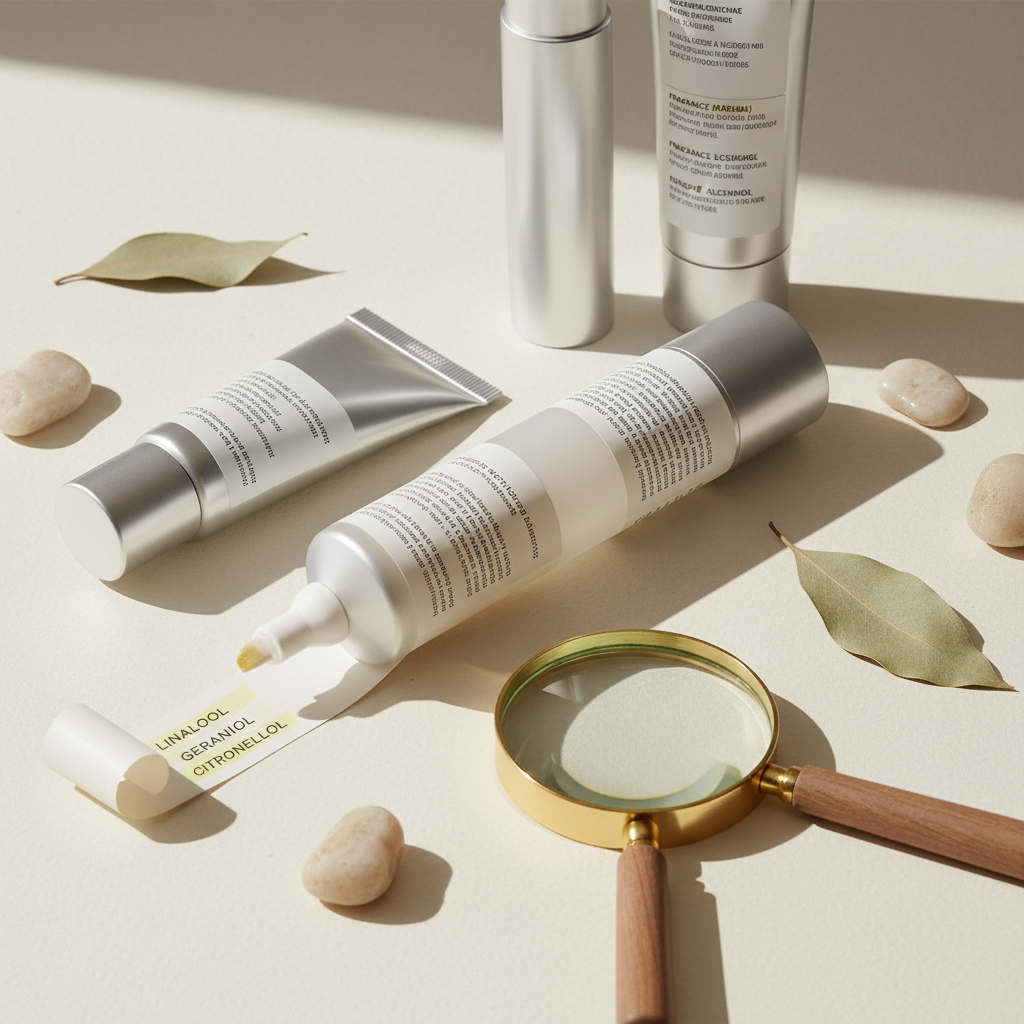
[!answer] To identify common contact allergens on a cosmetic ingredient (INCI) list, screen for keywords like "fragrance" or "parfum," specific preservatives such as isothiazolinones, acrylates in nail products, and certain natural extracts. Understanding these key categories is the first step to avoiding potential reactions and making informed choices for sensitive skin.
A frustrating rash or an unexplained skin reaction can often turn a beloved beauty product into a source of distress. Learning to decode the ingredient list—the International Nomenclature of Cosmetic Ingredients, or INCI—is the most powerful tool you have for navigating the world of cosmetics safely and confidently.
What is a contact allergen, exactly?
A contact allergen is a substance that can cause an immune reaction in the skin, known as allergic contact dermatitis (ACD), after direct contact. Unlike an irritant, which causes immediate, localized inflammation in anyone exposed to a high enough concentration, an allergen only affects individuals who have been previously "sensitized." Sensitization is a process where the immune system learns to recognize a specific substance as a threat. Once sensitized, even a tiny exposure to that allergen can trigger a reaction, which can manifest as redness, itching, swelling, or blistering, often appearing 12-72 hours after contact.
This delay is a hallmark of ACD and can make it difficult to pinpoint the culprit. The reaction isn't necessarily confined to the first time you use a product; sensitization can develop over time with repeated exposure to an ingredient. This is why a product you've used safely for years can suddenly seem to cause a reaction. Understanding this mechanism is key to realizing that cosmetic allergies are highly personal and require careful investigation of the products you use regularly.
Why is "fragrance" such a significant category for allergies?
Fragrance mixtures are one of the most common causes of contact allergies in cosmetics. The terms "fragrance," "parfum," or "aroma" on an ingredient list are unique because they can represent a complex cocktail of dozens or even hundreds of individual scent chemicals, all protected as a trade secret. This "fragrance loophole" prevents consumers from knowing the specific ingredients they are being exposed to, some of which are well-established allergens.
A 2018 study published in the Journal of the European Academy of Dermatology and Venereology used a smartphone app to analyze 5,588 cosmetic products and found that fragrance contact allergens were exceptionally common [1]. While regulations in jurisdictions like the EU require the specific labeling of 26 common fragrance allergens (like Limonene, Linalool, and Geraniol) if they exceed a certain concentration, many more potentially sensitizing scent ingredients can remain hidden under the general term. For those with sensitive skin, choosing products explicitly labeled "fragrance-free" (not "unscented," which may contain masking fragrances) is the most straightforward strategy for avoiding these potential triggers. It
What Other Allergens Should I Look For Besides Fragrance?
Beyond fragrance, common contact allergens in cosmetics include certain preservatives, hair dyes, and acrylates. Preservatives are essential for preventing the growth of bacteria and mold, but some of the most effective ones are also potent sensitizers. The two main families to watch for are formaldehyde-releasers (like Quaternium-15, DMDM Hydantoin, and Diazolidinyl Urea) and isothiazolinones (Methylisothiazolinone or MI, and Methylchloroisothiazolinone or MCI). While regulations have restricted the use of MI/MCI in leave-on products in many regions, they can still be found in rinse-off products like cleansers and shampoos.
Formaldehyde-releasing preservatives work by slowly emitting a small amount of formaldehyde, which is a very effective antimicrobial agent but also a well-known allergen. Individuals with a diagnosed formaldehyde allergy must be vigilant in checking for these ingredients. While the amounts are low, for a sensitized person, it's enough to trigger a significant dermatitis reaction. Reading the INCI list is the only reliable way to identify them, as marketing claims like "formaldehyde-free" can sometimes be misleading if the product contains an ingredient that releases it over time.
Another major category of concern is hair dyes, particularly for permanent, dark shades. The primary culprit is p-phenylenediamine (PPD), a highly effective dye molecule that is also a very strong contact allergen. This is why professional colorists and at-home dye kits strongly recommend a patch test before every application, even if you have used the color before. An allergy to PPD can cause severe reactions, including intense facial swelling. For nail products, especially gel polishes and acrylics, acrylates (like Ethyl Acrylate or HEMA/2-Hydroxyethyl Methacrylate) are known sensitizers. The allergy is typically to the uncured "monomer," emphasizing the need for proper curing with a UV lamp and avoiding direct skin contact during application.
Are 'Natural' or 'Hypoallergenic' Products Safer?
Not necessarily, as terms like "natural," "organic," and even "hypoallergenic" are not strictly regulated and do not guarantee a product will be free from potential allergens. Many botanical extracts and essential oils are potent, well-documented contact allergens. For example, Tea Tree oil (Melaleuca alternifolia), Lavender oil (Lavandula angustifolia), and plants from the Compositae family (like chamomile and calendula) can all cause allergic contact dermatitis in sensitized individuals. The idea that natural ingredients are inherently gentler is a common misconception; poison ivy is a perfect example of a potent natural allergen.
Similarly, the term "hypoallergenic" simply means the manufacturer believes the product is less likely to cause an allergic reaction. However, there are no federal standards or definitions that govern the use of this term. A product labeled "hypoallergenic" can still contain fragrance, preservatives, or other substances that are known allergens for some individuals. It might exclude the most common triggers, but it provides no guarantee of safety. Consumers with known sensitivities must still scrutinize the INCI list rather than relying on front-of-label marketing claims.
Ultimately, the only way to know if a product is safe for *you* is to compare the ingredient list against your known allergens. If you do not know your specific triggers, you should focus on avoiding the most common categories, like fragrance. Seeking a diagnosis from a dermatologist via patch testing is the gold standard for identifying specific chemical sensitivities. This process involves applying patches with small amounts of common allergens to your back to see which ones cause a reaction, providing a clear list of ingredients to avoid in the future.
How Can I Test a New Product if I Suspect I Have Sensitive Skin?
If you have sensitive or reactive skin, you can perform a "repeat open application test" (ROAT), often called a home patch test, before applying a new product more widely. This involves applying a small, pea-sized amount of the product to a discreet area of skin, such as your inner forearm or behind the ear, twice a day for at least seven consecutive days. This extended duration is crucial because allergic contact dermatitis is a delayed (Type IV) hypersensitivity reaction, meaning it can take several days of exposure for the rash, itching, or swelling to appear. A single application is often not enough to reveal a potential allergy.
During the test period, you should monitor the area for any signs of a reaction. Look for redness, small bumps, itching, burning, blistering, or scaling. If you notice any of these symptoms, wash the area thoroughly with a gentle cleanser and stop using the product immediately. A mild reaction can be treated with an over-the-counter hydrocortisone cream, but if the reaction is severe or spreads, you should consult a healthcare professional. If the seven-day period passes with no reaction, the product is likely safe for you to use.
It is important to distinguish this at-home method from the formal diagnostic patch testing performed by a dermatologist. A home test can only tell you if a specific, finished *product* causes a reaction on your skin. It cannot identify the individual *ingredient* responsible. A clinical patch test, on the other hand, uses purified, known allergens applied under occlusion to your back to pinpoint the exact chemical culprit. If you suffer from recurrent dermatitis or suspect you have multiple cosmetic allergies, seeking a referral to a dermatologist for formal patch testing is the most effective way to gain control over your skin health.
Sources
- [1] Fragrance contact allergens in 5588 cosmetic products identified through a novel smartphone application. — Bennike NH, Oturai NB, Müller S. Journal of the European Academy of Dermatology and Venereology : JEADV (2018) · PubMed
- [2] Contact Allergy-Emerging Allergens and Public Health Impact. — Uter W, Werfel T, Lepoittevin JP, White IR.. 2020 · Europe PMC
- [3] Presence of 2-hydroxyethyl methacrylate (HEMA) and other (meth)acrylates in nail cosmetics, and compliance with EU legislation: An online market survey. — Steunebrink IM, de Groot A, Rustemeyer T. Contact dermatitis (2024) · PubMed
- [4] Propolis and Beeswax in Cosmetics: A Market Survey and Literature Review on Their Relationship and Role in Allergic Contact Dermatitis. — de Groot AC, Ipenburg NA, Rustemeyer T.. 2026 · Europe PMC
- [5] The impact of perfumes and cosmetic products on human health: a narrative review. — Alblooshi S.. 2025 · Europe PMC