Guides
A Chef's Guide to Heat and Steam-Proofing Your Skincare
Professional kitchen heat exposure demands a resilient skincare routine. Learn how to cleanse, hydrate, and protect your skin barrier from heat, steam, and.
September 13, 2026
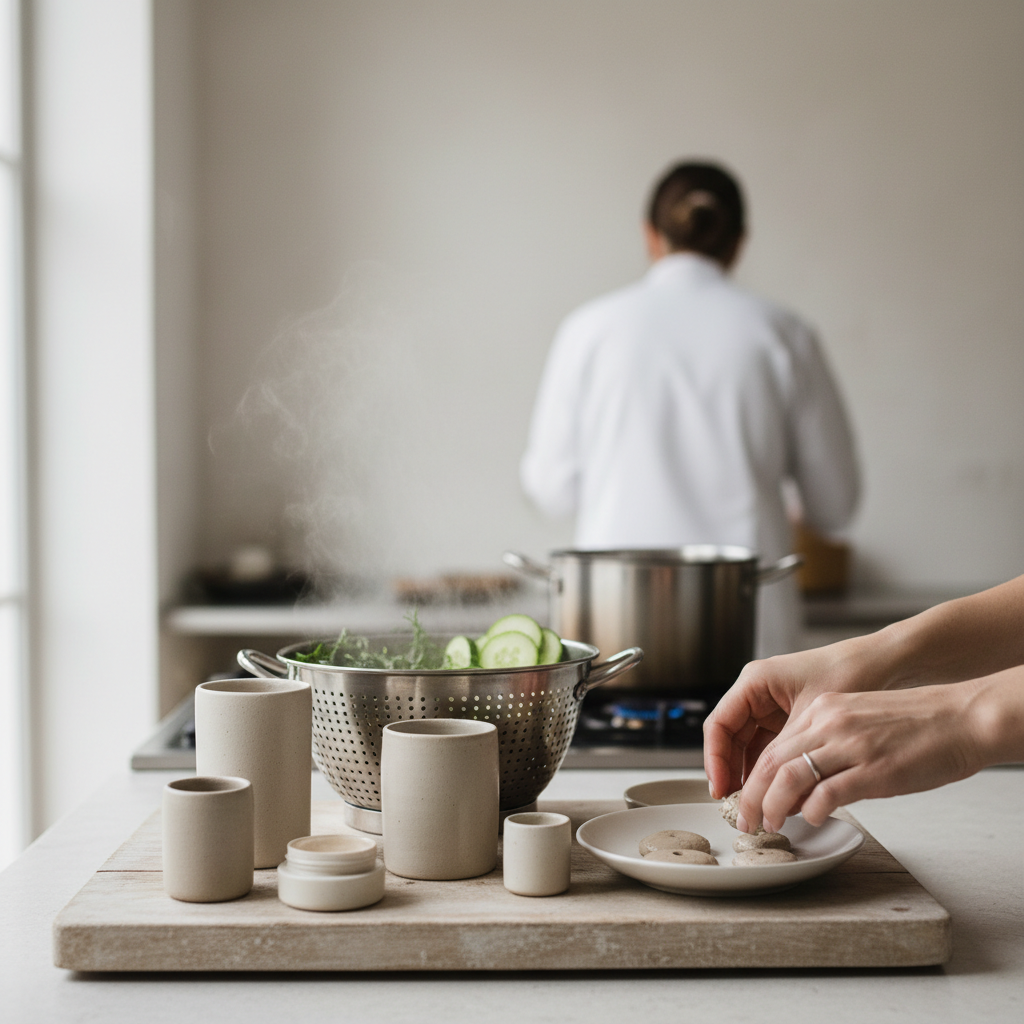
[!answer] A safe skincare routine for professional kitchen heat exposure centers on supporting the skin barrier. This involves using a gentle, non-comedogenic cleanser, a lightweight hydrator with humectants, antioxidant serums to mitigate inflammation, and niacinamide to regulate oil production and reduce redness, all while avoiding heavy, occlusive creams.
Exposure to the intense, sustained heat of a professional kitchen is a unique form of environmental stress, and your skin is on the front lines. The constant dance between searing heat, roiling steam, and splattering oils requires a thoughtful, resilient skincare routine that goes beyond basic cleansing to actively protect and repair.
What does kitchen heat actually do to your skin?
Intense heat fundamentally alters how your skin behaves, primarily by causing inflammation, dehydration, and increased oil production. The high temperatures trigger vasodilation, an expansion of the blood vessels near the skin's surface, which leads to persistent redness and flushing. This inflammatory state can exacerbate conditions like rosacea. Simultaneously, your body sweats to cool down, but the combination of heat and sweat accelerates transepidermal water loss (TEWL), leaving the skin paradoxically dehydrated despite the humid environment. This dehydration can compromise your skin's protective barrier, making it more vulnerable to irritation.
Furthermore, some research suggests that heat can stimulate sebaceous glands to produce more oil. When this excess sebum mixes with sweat, airborne food particles, and dead skin cells, it creates a perfect storm for clogged pores, blackheads, and breakouts. This complex interplay of heat, moisture, and oil means the skin is often left feeling greasy on the surface yet tight and dehydrated underneath—a state that demands a targeted, rebalancing approach.
How should I be cleansing my face?
You should cleanse with a gentle, pH-balanced cleanser twice daily, and strongly consider a double cleanse at night to thoroughly remove stubborn oils and grime. The goal is to deeply clean without stripping the skin's acid mantle, which is crucial for a healthy barrier. In a kitchen environment, skin accumulates a complex layer of oil-based residue (cooking fats, sebum) and water-based residue (sweat, steam). A single pass with a standard cleanser often isn't enough to break it all down, while a harsh, stripping cleanser can create more problems than it solves.
The double cleansing method, originating from Korean skincare, is ideally suited for this challenge. Start with an oil-based cleanser or a cleansing balm. Massage it onto dry skin to dissolve makeup, sunscreen, and the day's grease. Oil cleansers work on the principle of "like dissolves like." Then, emulsify with a little water and rinse. Follow up with a water-based, non-foaming, or low-foaming gel or cream cleanser to wash away any remaining impurities. This two-step process ensures your skin is impeccably clean yet remains soft and hydrated, not tight or squeaky.
What kind of moisturizer is best for a hot environment?
A lightweight, non-comedogenic gel or lotion-based moisturizer is far better for a hot kitchen environment than a heavy cream. While it may seem counterintuitive to put moisturizer on when you're constantly feeling greasy, it is one of the most important steps for rebalancing heat-stressed skin. Skipping moisturizer can worsen the problem, as dehydrated skin may over-produce oil to compensate. The key is choosing the right texture and formulation.
Heavy creams often contain high concentrations of occlusive ingredients like petrolatum or shea butter. While excellent for very dry skin in cold climates, in a hot, humid kitchen they can trap heat and sweat against the skin, leading to clogged pores, miliaria (prickly heat), and breakouts. Instead, look for gel, gel-cream, or light lotion formulas. Prioritize ingredients like hyaluronic acid, glycerin, and beta-glucan—all powerful humectants that draw moisture into the skin without adding weight or oil. These formulations provide essential hydration while feeling refreshing and breathable, leaving your skin plump and hydrated, not suffocated. For those who need guidance on what to look for, exploring a well-structured non-comedogenic routine for acne can provide a solid foundation.
[!quote] ...skin irritation and breakdown are increased. — [1]
How can I protect and repair my skin barrier?
Ingredients like niacinamide, ceramides, and targeted antioxidants are crucial for repairing the skin's lipid barrier and protecting it from ongoing environmental stress. A professional kitchen is an unrelenting environment, and professional-grade skincare requires a focus on resilience. Just as PPE can cause skin breakdown for medical workers, the daily occupational exposures in a kitchen demand a focus on skin integrity [1]. Your barrier is what stands between you and the chaotic mix of heat, steam, oil, and irritants.
Niacinamide (Vitamin B3) is a powerhouse ingredient for this context. It is clinically shown to improve barrier function, reduce redness and inflammation, regulate sebum production, and minimize the appearance of pores. A serum with 4-5% niacinamide applied after cleansing can make a significant difference. Ceramides are lipids that are naturally part of your skin barrier. Using a ceramide-rich moisturizer helps replenish what is lost through cleansing and environmental stress, effectively re-cementing the "bricks and mortar" of your skin.
Antioxidants are your defense against oxidative stress. Heat can generate free radicals, unstable molecules that damage skin cells and accelerate aging. An antioxidant serum, particularly one containing Vitamin C (in a stable form like L-Ascorbic or THD Ascorbate), Vitamin E, and Ferulic Acid, can help neutralize this damage. Apply it in the morning after cleansing and before moisturizing to create a protective shield that works all shift long.
Should I use sunscreen in a kitchen?
Yes, you should absolutely wear sunscreen if your kitchen has windows or if you step outside for breaks. While it may not seem like a priority amidst boiling pots and hot ovens, UV exposure is cumulative and a primary driver of skin aging and cancer risk. The heat from stoves and ovens is primarily infrared radiation, but many professional kitchens have windows that allow UVA rays to penetrate deep into the skin, degrading collagen over time.
Even short, repeated trips outside—to take out the trash, receive a delivery, or grab a coffee—add up. Furthermore, some evidence suggests that heat and infrared radiation can amplify the damaging effects of UV light. The challenge is finding a sunscreen that can withstand the sweat and heat of a kitchen without running into your eyes or feeling like a greasy mask. Look for lightweight, "sweat-resistant" formulas, often marketed for sport. Mineral sunscreens containing zinc oxide and titanium dioxide tend to be less likely to sting the eyes than some chemical filters. They work by sitting on top of the skin and physically blocking rays, which can also feel more comfortable in high heat.
What ingredients can help with sweat and clogged pores?
Salicylic acid (a beta-hydroxy acid, or BHA) is an ideal active ingredient for preventing and treating the clogged pores common in a kitchen environment. Unlike alpha-hydroxy acids (AHAs), which are water-soluble, BHAs are oil-soluble. This unique property allows them to penetrate into the pore lining and dissolve the mixture of sebum and dead skin cells from within. This not only helps treat existing blackheads and breakouts but also prevents new ones from forming.
You can incorporate a 2% BHA product into your routine 2-3 nights a week after cleansing. A liquid exfoliant on a cotton pad is often the most effective format. It’s important to introduce it slowly to avoid irritation, especially since your skin barrier is already under stress. If your skin is easily irritated, you might also look for cleansers or masks containing salicylic acid, which provides a shorter contact time. As with any active ingredient, when you are trying to manage multiple sources of irritation, it can be useful to know how to spot common skin allergens to ensure your other products aren’t contributing to the problem.
Are there specific ingredients to avoid?
Yes, it’s wise to avoid heavy occlusives during your shift, as well as high concentrations of sensitizing fragrances, essential oils, and harsh physical scrubs. While thick creams and ointments using ingredients like petrolatum can be excellent for slugging or barrier repair overnight in a cool room, wearing them in a hot kitchen is a recipe for clogged pores. They form a seal that traps heat and sweat, which is the last thing you need.
Fragrance and essential oils can also pose a problem. When the skin barrier is compromised by heat and dehydration, its permeability is increased, making it more susceptible to sensitivity and allergic reactions [3]. Components that are harmless on healthy skin can become irritants under these conditions. The same goes for harsh physical scrubs, like those made with crushed pits or jagged crystals. These create micro-tears in the skin, further damaging a barrier you should be focused on protecting. Stick to gentle chemical exfoliants like BHA or gentle enzymes for smoothing texture.
The takeaway
Building a resilient skincare routine for a professional kitchen is an exercise in balance. The core tenets are calming inflammation, delivering lightweight hydration, and diligently supporting your skin barrier. Focus on a gentle double cleanse at night, layering a hydrating toner or essence, an antioxidant serum, a niacinamide treatment, and a non-comedogenic gel moisturizer to create a foundation of health that can withstand the heat.
Sources
- [1] A Path to Resume Aesthetic Care: Executive Summary of Project AesCert Guidance Supplement-Practical Considerations for Aesthetic Medicine Professionals Supporting Clinic Preparedness in Response to the SARS-CoV-2 Outbreak. — Dover JS, Moran ML, Figueroa JF, Furnas H, Vyas JM, Wiviott LD, Karchmer AW.. 2020 · Europe PMC
- [2] Abstracts from the European Academy of Allergy and Clinical Immunology Congress, 26-30 May 2018, Munich, Germany.. 2018 · Europe PMC