Guides
A Guide to Cosmetic Shelf Life Symbols & Expiration Dates
Shelf life symbols on cosmetics, like the 'jar' icon (PAO), tell you how many months a product is safe after opening, which depends on its preservatives.
July 13, 2026
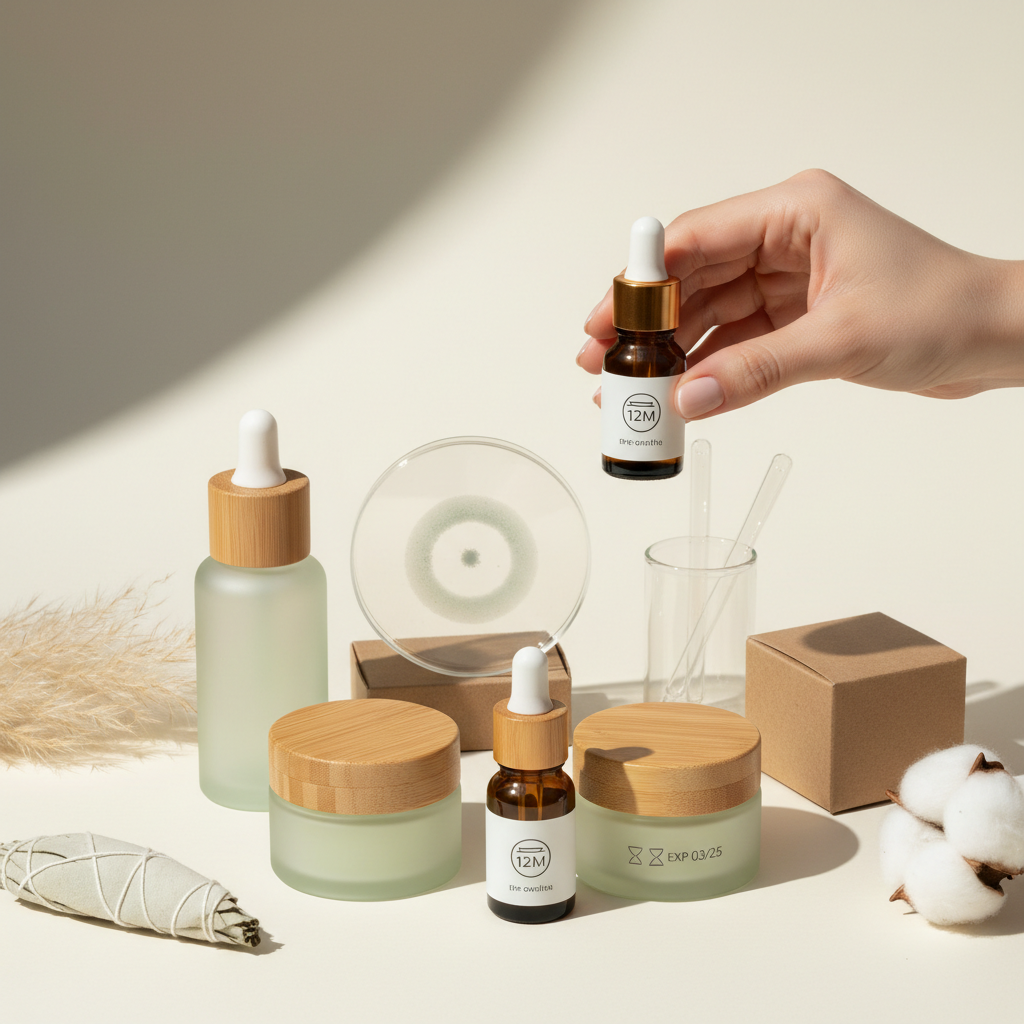
[!answer] Cosmetic shelf life is indicated by symbols like the Period After Opening (PAO) open jar, which shows how many months a product remains safe after its first use. This period is determined by the efficacy of its preservative system, which is rigorously tested to prevent harmful microbial growth during normal use.
These symbols are a crucial guide to your product's safety, but they aren't a guarantee. How you store and handle a product plays an equally important role in determining whether it reaches its potential lifespan without becoming a science experiment on your bathroom counter.
What do the shelf life symbols on cosmetics actually mean?
The two most important symbols to understand are the Period After Opening (PAO) and the Best Before End Date (BBE). The PAO symbol, which is mandatory in the European Union and widely adopted globally, looks like a small open jar with a number followed by the letter "M" (e.g., "12M"). This signifies that the product should be used within 12 months after it has been opened for the first time.
The PAO is determined by a combination of the product’s formulation and preservative efficacy testing. It applies to products with a total lifespan of more than 30 months. For products with a shorter shelf life (under 30 months), EU regulations require a Best Before End Date, often indicated by an hourglass symbol or the words "Best before...". This is a hard expiration date, much like you’d see on food, and the product should not be used after this date even if it remains unopened.
In the United States, regulations are less prescriptive. The FDA requires that manufacturers ensure their products are safe, but does not mandate specific expiration dates or PAO symbols on most cosmetics. However, as a matter of best practice and global commerce, the vast majority of brands sold in the US voluntarily use the PAO symbol, providing a consistent and reliable guideline for consumers everywhere.
Why do cosmetics expire?
Cosmetics expire primarily because of microbial contamination. Every time you open a jar, dip your fingers into a cream, or pull a wand from a tube, you introduce common microorganisms like bacteria, yeast, and mold from your skin and the environment. Water-based products like lotions, liquid foundations, and mascaras are particularly hospitable environments for these microbes to thrive. Without an effective preservative system, a cream could become dangerously contaminated within days.
Beyond microbial growth, products can also expire as their chemical formulation breaks down. Emulsions, which are mixtures of oil and water, can separate over time, ruining the texture and efficacy. Active ingredients, such as antioxidants like Vitamin C or UV filters in sunscreen, can oxidize or degrade, rendering them ineffective. Lastly, oils in a formula can go rancid, leading to an unpleasant smell and potential skin irritation.
[!quote] Preservatives are not just an ingredient; they are the product's immune system, essential for protecting both the formula and the consumer from harm.
How do preservatives keep products safe?
Preservatives are antimicrobial substances that are added to cosmetic formulations to prevent the growth of bacteria, yeast, and mold. A good preservative system must be "broad-spectrum," meaning it is effective against a wide range of different microorganisms. Cosmetic formulators often use a combination of preservatives to achieve this, creating a synergistic effect that offers robust protection.
Commonly used and effective preservatives include substances like phenoxyethanol, sodium benzoate, and potassium sorbate. To ensure these systems work as intended, manufacturers perform a standardized protocol known as Preservative Efficacy Testing (PET), or "challenge testing." During a PET, a batch of the finished product is intentionally inoculated with a cocktail of specific microbes. The product is then tested at set intervals (e.g., 7, 14, and 28 days) to see how effectively the preservative system reduces the microbial count. For a product to pass, it must meet strict criteria for microbial reduction, ensuring it can withstand typical consumer use.
While some consumers have concerns about synthetic preservatives, driven by debates over ingredients like parabens and formaldehyde-releasers, these ingredients have a long history of safe use at low concentrations. In fact, one of the most significant safety risks in cosmetics comes not from well-vetted preservatives, but from under-preserved products that can cause serious skin or eye infections.
How can I tell if a product has gone bad?
Your senses are your best guide. The PAO date is a guideline based on controlled testing, but a product can spoil sooner if mishandled. Be on the lookout for any noticeable changes in the product's characteristics, which are clear signs it’s time to toss it, regardless of what the date on the label says.
First, trust your nose. A change in smell is a primary indicator of spoilage. If your fragrance-free cream starts to smell sour, funky, or like rancid oil, its preservative system has likely failed or the oils have degraded. Second, look at its texture and color. If a smooth lotion has become clumpy, watery, or has separated into layers that won't mix, it’s no longer stable. Any discoloration or change in hue is another red flag. Finally, any visible signs of fuzzy or spotty growth are an unambiguous indication of mold contamination.
If you experience an unexpected skin reaction like redness, itching, or bumps after using a familiar product, it could be a sign of spoilage, though it is also important to know how to read cosmetic labels for common skin allergens that could be the cause.
What are the risks of using expired cosmetics?
Using expired cosmetics is not a risk worth taking. At best, an expired product may simply not work as intended—an anti-aging serum with degraded antioxidants offers no benefit, and a clumpy foundation is impossible to apply well. At worst, using a contaminated product can lead to significant health issues. Applying a cream contaminated with bacteria can cause skin infections like impetigo or cellulitis, trigger acne breakouts, or worsen conditions like eczema.
The risks are most acute for products used around the eyes. Mascaras, liquid liners, and eye creams that are past their prime can harbor aggressive bacteria that may cause painful and dangerous eye infections, conjunctivitis (pink eye), or styes. Because the eye area is so delicate and provides a direct path for infection, it is critical to adhere strictly to the short PAO dates for these products, which are typically only 3 to 6 months.
How should I handle "preservative-free" products?
The term "preservative-free" requires careful scrutiny. For water-based formulas, it can be a significant red flag, as the risk of contamination is exceptionally high. Truly unpreserved products are typically anhydrous (water-free), such as facial oils, powder formulas, or solid balms, where microbes have no water in which to multiply. These products have a longer natural shelf life, though their oils can still go rancid over time.
Often, "preservative-free" is a marketing term used by brands that avoid traditional preservatives but instead rely on other ingredients that have secondary antimicrobial properties, such as essential oils, certain plant extracts (like radish root ferment), or high concentrations of glycols or alcohol. While these can be effective, they must still pass the same rigorous challenge testing to be considered safe. When choosing products that advertise themselves this way, it's wise to stick with reputable brands that are transparent about their safety testing. You can also become more familiar with the landscape of common cosmetic ingredients, especially if you have concerns about potential endocrine disruption from certain chemicals.
How can I make my products last longer?
Proper storage and handling can significantly help a product remain safe and effective up to its PAO date. Heat, light, and air are enemies of product stability. Storing your skincare in a hot, steamy bathroom is one of the worst things you can do; a cool, dark cabinet or drawer is a far better choice. Always make sure lids and caps are screwed on tightly to minimize exposure to air and humidity, which can degrade active ingredients and encourage microbial growth.
Hygiene is paramount. Always wash your hands before applying any product. For creams and lotions that come in jars, avoid dipping your fingers directly into the pot. Instead, use a clean spatula to decant a small amount of product. This simple step prevents the introduction of microbes from your hands into the bulk of the product, keeping it fresher for longer. Finally, try to resist the urge to "stretch" a product by diluting it with water—this will destabilize the preservative system and create a perfect breeding ground for bacteria.
The takeaway
Cosmetic shelf life symbols are your first line of defense against expired products. Respect the Period After Opening (PAO) date as a reliable guide for safety and efficacy, and always trust your senses to spot the tell-tale signs of spoilage. By pairing smart label-reading with proper storage and hygienic habits, you can ensure your products remain safe and effective from the first use to the last.
Sources
- [1] ESICM LIVES 2025. 2025 · Europe PMC
- [2] Posters. 2024 · Europe PMC
- [3] The 7th Congress of Biophysicists of Russia - conference proceedings : Abstracts. 2023 · Europe PMC
- [4] Abstract Book: 25th Congress of the European Hematology Association Virtual Edition, 2020. 2020 · Europe PMC
- [5] Program Abstracts from the 21st International Association of Gerontology and Geriatrics (IAGG) World Congress.. 2017 · Europe PMC
- [6] 39th ESCP European symposium on clinical pharmacy & 13th SFPC congress: clinical pharmacy at the front line of innovations. 21–23 October 2010, Lyon, France. 2011 · Europe PMC
- [7] OpenFDA Cosmetic Adverse Event Report (#1). FDA Adverse Event Reporting System (2022) · OpenFDA
- [8] OpenFDA Cosmetic Adverse Event Report (#2). FDA Adverse Event Reporting System (2021) · OpenFDA
- [9] OpenFDA Cosmetic Adverse Event Report (#3). FDA Adverse Event Reporting System (2021) · OpenFDA
- [10] OpenFDA Cosmetic Adverse Event Report (#4). FDA Adverse Event Reporting System (2018) · OpenFDA