Ingredients
Octocrylene in Sunscreen: A Science-Based Safety Guide
Octocrylene in sunscreen is considered safe by regulators. This article explores the science behind concerns about its potential endocrine disruption in humans.
July 2, 2026
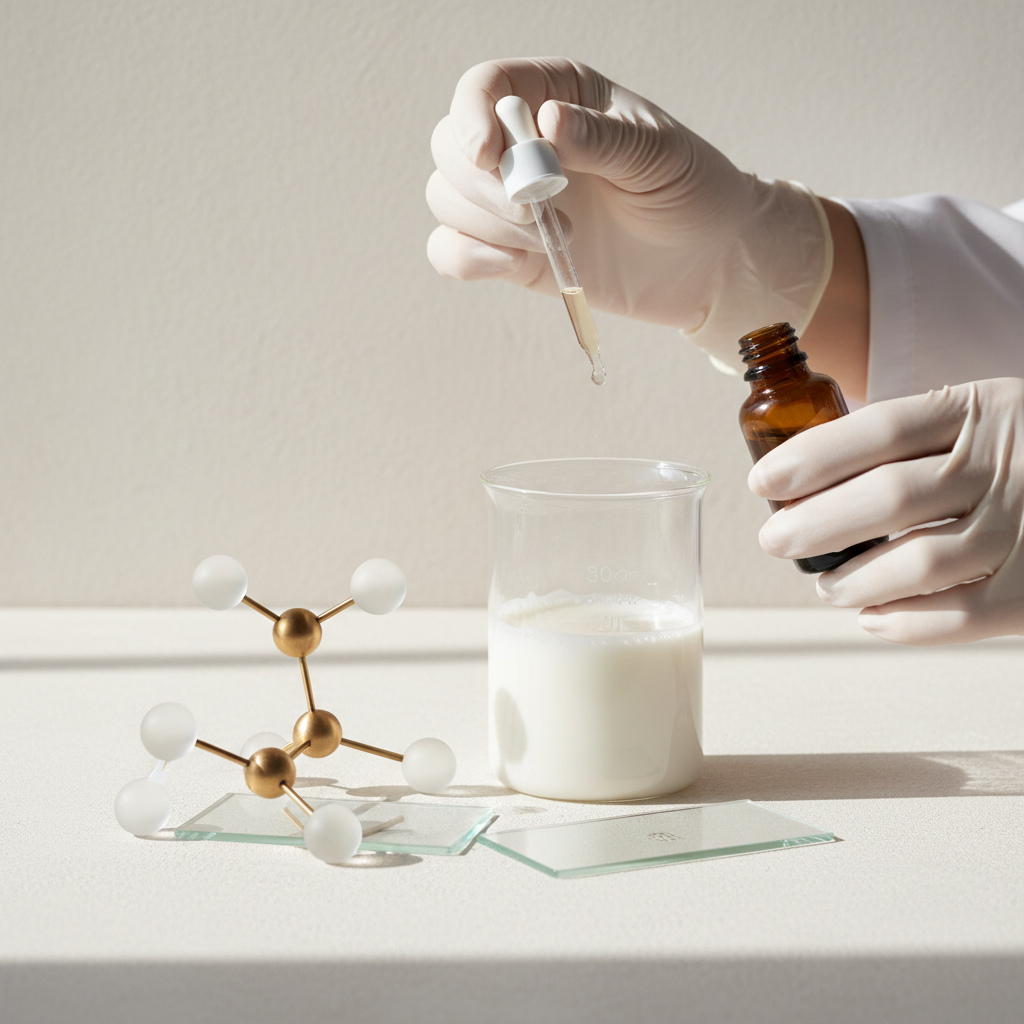
[!answer] Octocrylene is a chemical UV filter used to provide sun protection and stabilize other ingredients in sunscreen. Regulators like the EU's SCCS have reviewed the evidence and consider it safe for use in cosmetics at current concentrations. While research into potential endocrine disruption is ongoing, current data suggests systemic absorption in humans is too low to pose a significant health risk for most people.
Sunscreen is an non-negotiable part of any skin health routine, yet the ingredient list can feel like a chemistry exam. Octocrylene is a common name on that list, and it has become the subject of discussion regarding its safety and potential effects on the endocrine system. Understanding the science behind these conversations allows for a more informed, less anxious approach to sun protection.
What is octocrylene, and why is it in my sunscreen?
Octocrylene is an organic compound used as an active ingredient in chemical sunscreens. Its primary role is to absorb and filter the sun's ultraviolet (UV) radiation, specifically in the UVB and short-wave UVA (UVA-2) spectrum. This absorption process converts UV energy into a small amount of heat, preventing it from penetrating the skin and causing DNA damage, which can lead to premature aging and skin cancer. For decades, it has been approved by regulatory bodies worldwide, including in Europe and the United States, and a major 2019 review confirmed its safety and efficacy as a UV filter [1].
Beyond its own protective qualities, octocrylene plays a crucial secondary role: it is an excellent photostabilizer. Some of the most effective broad-spectrum UVA filters, most notably avobenzone, are notoriously unstable and break down quickly when exposed to sunlight. Octocrylene helps to stabilize avobenzone, allowing it to provide sustained protection. This stabilizing property is why you will often see both ingredients listed together in many popular broad-spectrum sunscreen formulations.
Does octocrylene get absorbed into the body?
Yes, studies show that like many chemical UV filters, a small amount of octocrylene can be absorbed through the skin and enter the bloodstream. This systemic absorption is the central reason why its safety has come under scrutiny, particularly regarding potential hormonal effects. However, it is a critical scientific principle that absorption does not automatically equal harm. The dose makes the poison, and the key questions are how much is absorbed, what the body does with it, and what concentration is required to cause a biological effect.
Recognizing that minimizing absorption is desirable, cosmetic scientists are developing new formulation technologies. One promising approach is microencapsulation, where UV filters like octocrylene are enclosed within tiny shells, such as silk-peptide-modified silicone polymers. A recent study demonstrated that this technique can create a highly effective sunscreen that sits on the skin's surface, significantly reducing skin penetration compared to conventional formulations [2]. These innovations show a proactive approach by the industry to enhance the safety profile of time-tested ingredients.
What does the research say about endocrine disruption?
The term "endocrine disruptor" refers to a chemical that can interfere with the body's hormonal system. The concern is that by mimicking or blocking hormones, these chemicals could potentially lead to adverse health outcomes. When it comes to octocrylene, the evidence is complex and requires a careful distinction between what happens in a laboratory petri dish versus in the human body.
Some in vitro studies—meaning experiments conducted on cells or tissues in a lab setting—have suggested that octocrylene can exhibit weak hormonal activity. For example, a 2025 review noted that some organic UV filters, including octocrylene, showed an ability to interfere with thyroid pathways in lab models [3]. These studies are useful for identifying potential hazards but cannot replicate the complex environment of a living organism. The concentrations used in lab dishes are often thousands of times higher than what would ever be found in a person's bloodstream from applying sunscreen.
[!quote] The key question is not whether a substance can interact with a hormone receptor in a petri dish, but whether it does so in the human body at real-world exposure levels. — [4]
This is where in vivo data becomes essential. A 2023 study compared the endocrine activity of various UV filters found in lab databases (like ToxCast) with their actual measured concentrations in human plasma after sunscreen use [4]. It found that for octocrylene, the plasma concentrations were substantially lower than the levels that were shown to produce endocrine activity in high-throughput screening assays. This suggests that while octocrylene might have the potential for endocrine activity in a lab, the amount absorbed by the human body from typical sunscreen use is likely too low to trigger that effect.
Are there specific concerns about the thyroid?
Recent attention has focused specifically on the thyroid gland, which produces hormones that regulate metabolism throughout the body. The 2025 review of both lab and human studies investigated the potential for various organic UV filters to act as thyroid disruptors [3]. It highlighted in vitro evidence showing that some of these compounds could interfere with the function of thyroid peroxidase (TPO), an enzyme essential for producing thyroid hormones, or affect hormone transport and receptor signaling.
However, the review also notes the limitations of this data. While the lab findings point to a potential mechanism of action, robust evidence from human population studies directly linking octocrylene exposure from sunscreen to clinical thyroid disease is lacking. The endocrine system has feedback mechanisms and a capacity to adapt, and weak hormonal effects from an external chemical at very low doses may not be enough to overcome the body’s natural regulatory processes. The science in this area is still developing, and it remains a topic of active research.
Should certain people be more cautious?
While the consensus points to octocrylene being safe for the general, healthy population, risk assessment science is beginning to explore whether "vulnerable" individuals might have different considerations. Standard cosmetic safety assessments are typically based on healthy adults with intact skin [5].
One such group includes people with compromised skin barriers. Conditions like eczema (atopic dermatitis) or ichthyosis can increase the permeability of the skin, potentially leading to higher absorption rates of topical ingredients, including UV filters [5]. For these individuals, the balance of risk and benefit might shift, though this is still a theoretical consideration that requires more research. Another group given special consideration is pregnant women. Sunscreen use during pregnancy is highly recommended to protect against UV-induced skin changes like melasma [6]. While a review on photoprotection in pregnancy noted general safety concerns about chemical filters, it did not single out octocrylene as a specific risk and emphasized the proven benefits of sun protection. For those looking to be exceptionally cautious during pregnancy or for individuals with skin conditions, mineral sunscreens are an excellent and effective alternative.
For parents, there are often heightened concerns about chemical UV filters in products for children, whose smaller body size and developing systems could make them theoretically more susceptible. This is a valid consideration, and while regulators have deemed current formulas safe, many parents opt for mineral-based sunscreens for their children out of an abundance of caution.
How can I make an informed choice about sunscreen?
Navigating sunscreen aisles doesn't have to be a source of stress. The most important choice you can make is to wear a broad-spectrum sunscreen with SPF 30 or higher every single day. The proven risk of skin cancer from UV exposure is far greater than the theoretical risks of any approved sunscreen ingredient.
For those who prefer to avoid octocrylene or other chemical filters, the choice is simple: opt for a mineral-based sunscreen. These formulations use zinc oxide and/or titanium dioxide as their active ingredients. These minerals are not absorbed into the skin; instead, they form a physical barrier on the surface that reflects and scatters UV rays. Modern mineral sunscreens have vastly improved cosmetically, with micronized and tinted versions that minimize the white cast they were once known for.
If you want to continue using chemical sunscreens, you can still be a discerning consumer. Learning how to read labels for potential endocrine disruptors is an empowering skill. Based on current evidence, octocrylene is not on the primary list of EDCs to avoid, but understanding ingredients puts you in control. Ultimately, the best sunscreen is the one you will enjoy using consistently.
The takeaway
Based on comprehensive reviews by regulatory bodies, octocrylene is considered a safe and effective sunscreen ingredient at its currently approved concentrations. While the scientific community continues to explore subtle endocrine effects of many chemicals, the existing human data suggests that the low level of octocrylene absorbed from sunscreen is not a cause for concern for most people. For anyone who feels more comfortable avoiding it, high-quality mineral sunscreens offer an excellent, effective alternative. You have safe, excellent options either way.
Sources
- [1] Review of the safety of octocrylene used as an ultraviolet filter in cosmetics. — Berardesca E, Zuberbier T, Sanchez Viera M. Journal of the European Academy of Dermatology and Venereology : JEADV (2019) · PubMed
- [2] Innovative Safe Sunscreens Technology: Evaluation of Skin Penetration Through In Vitro/In Vivo Assays and Environmental Friendliness. — Huang W, Zhang W, Tomihisa S, Kuang H, Li R, Chen X.. 2025 · Europe PMC
- [3] Thyroid disrupting effects of exposure to sunscreens: in vitro and in vivo evidence of the impact of organic UV-filters. — Greco A, Franchi E, Denegri M, Ambrosino S, Magri F, Coperchini F, Rotondi M.. 2025 · Europe PMC
- [4] Comparison between endocrine activity assessed using ToxCast/Tox21 database and human plasma concentration of sunscreen active ingredients/UV filters. — Onyango DO, Selman BG, Rose JL. Toxicological sciences : an official journal of the Society of Toxicology (2023) · PubMed
- [5] Next Generation Risk Assessment to Address Disease-Related Vulnerability-A Proof of Concept for the Sunscreen Octocrylene. — Fernández-Martín ME, Tarazona JV.. 2025 · Europe PMC
- [6] Valorization of Hazelnut (<i>Corylus avellana</i> L.) Skin By-Product as a Multifunctional Ingredient for Cosmetic Emulsions. — Mencherini T, Esposito T, Sansone F, Eletto D, Pannetta M, Gordobil O, Piccinelli AL, Ferniani C, Auriemma G, Rastrelli L, Aquino RP.. 2025 · Europe PMC
- [7] Photoprotection in pregnancy: addressing safety concerns and optimizing skin health. — Lim HW, Piquero-Casals J, Schalka S, Leone G, Trullàs C, Brown A, Foyaca M, Gilaberte Y, Krutmann J, Passeron T.. 2025 · Europe PMC