Guides
How to Find Endocrine Disruptors on an Ingredient List
To identify potential endocrine disruptors, check labels for phthalates (often in 'fragrance'), certain parabens, and specific UV filters like oxybenzone.
August 2, 2026
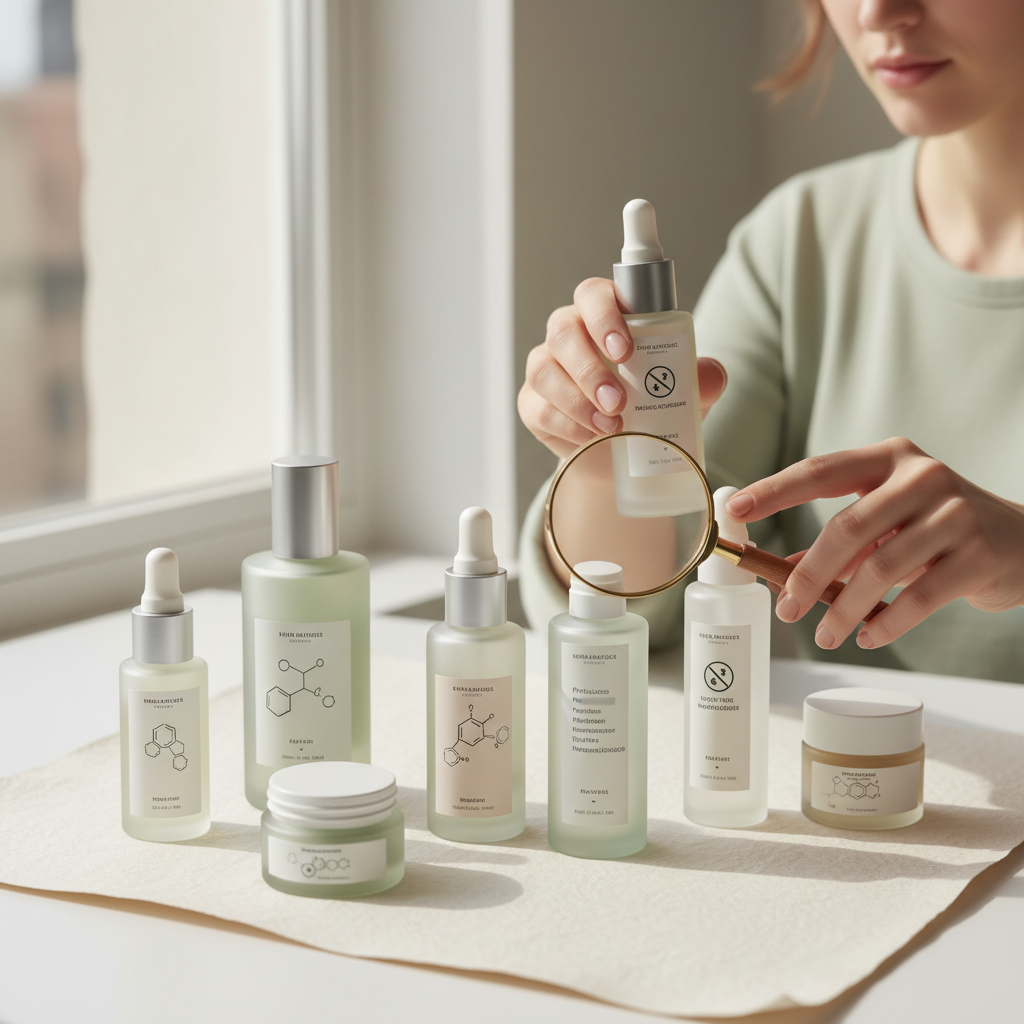
[!answer] To identify high-risk endocrine disrupting chemicals (EDCs) on a cosmetic label, look for specific ingredients like propylparaben, butylparaben, resorcinol, and the chemical UV filters oxybenzone and homosalate. Also, be aware that phthalates are often hidden under the general term “fragrance” or “parfum.”
The science of endocrine disruption is complex, and the presence of an ingredient on a label doesn’t automatically mean it will cause harm. But understanding what to look for empowers you to make informed choices that align with your personal comfort level and health considerations.
What are endocrine disruptors, and why are they in cosmetics?
Endocrine-disrupting chemicals (EDCs) are substances that can interfere with the body's endocrine (or hormone) system. They can mimic, block, or otherwise disrupt the normal function of hormones like estrogen and thyroid hormones, which are essential for development, reproduction, metabolism, and mood. In cosmetics, these ingredients aren’t added to disrupt hormones; they serve functional purposes like preserving a product, adding fragrance, providing UV protection, or helping a formula’s texture.
Increasing evidence suggests that certain ingredients in personal care products may pose health risks, yet many consumers lack the knowledge to identify them [1]. The concern is not typically about a single exposure but about the cumulative effect of many products used daily over many years. This constant, low-dose exposure is where the scientific questions about long-term health implications arise.
The use of personal care products is also not evenly distributed across the population. Factors like gender, race, and profession can lead to disproportionate exposure to potentially toxic chemicals. For example, women generally use more personal care products than men, and some research suggests that products marketed to women of color contain a higher prevalence of certain EDCs [2]. This raises important questions about health equity and the hidden burdens of beauty routines.
How can I spot phthalates on a label?
It’s exceptionally difficult to find phthalates just by reading an ingredient list, as they are most often hidden under the umbrella term “fragrance” or “parfum.” While some individual phthalates may be listed, the most common one in cosmetics—diethyl phthalate (DEP)—is used as a solvent and fixative in fragrance compositions and is rarely listed on its own.
Phthalates are a class of chemicals used to make plastics more flexible and are also used in a wide range of consumer goods, including cosmetics. The concern around them centers on their ability to disrupt the endocrine system, with studies linking exposure to impacts on reproductive health and development [2]. Professionals like hairdressers may experience continuous exposure to phthalates from the products they use daily [3].
[!quote] Despite being framed as tools for empowerment and wellness, PCPs may contribute to disproportionate toxic exposures, particularly for women and girls. — [2]
Because of the "fragrance loophole," navigating this category requires a bit of detective work. The most effective strategy is to look for products explicitly labeled "phthalate-free." Many brands that avoid these chemicals will state it clearly on their packaging or website. Choosing "fragrance-free" products is another good option, though some unscented products may still use masking fragrances. If you want to learn more, our guide to finding and avoiding phthalates in cosmetics offers more detail.
Are all parabens a concern?
No, the scientific consensus is more nuanced than a simple "yes" or "no." Parabens are highly effective preservatives used to prevent the growth of bacteria, mold, and yeast in cosmetic products. The most common ones you’ll see are methylparaben, ethylparaben, propylparaben, and butylparaben. The debate centers on the fact that they have weak estrogen-mimicking properties [1].
Regulatory bodies like the FDA and the EU’s Scientific Committee on Consumer Safety (SCCS) have reviewed the evidence extensively. They have concluded that short-chain parabens, like methylparaben and ethylparaben, are safe at the very low concentrations used in cosmetics because the body metabolizes them quickly. However, they hold more reservations about long-chain parabens, like propylparaben and butylparaben, and continue to review the data on them. Some studies note that parabens are among the chemicals of concern for occupational exposure in professions like hairdressing [3].
For consumers, identifying parabens is straightforward: their names almost always end in "-paraben." Due to public concern, many brands have moved to formulate without them, making "paraben-free" a common claim on packaging. If you prefer to avoid them, you have more alternatives now than ever before.
Which UV filters are under review for endocrine activity?
Several chemical UV filters, used in sunscreens to absorb ultraviolet radiation, are under review for their potential as endocrine disruptors. The most scrutinized are oxybenzone (also called Benzophenone-3), octinoxate, and homosalate. Research shows these chemicals can be absorbed into the bloodstream through the skin and have been detected in human blood, urine, and breast milk.
In vitro and in vivo studies have shown that some of these organic UV filters can interfere with the thyroid hormone system [4]. Oxybenzone, for instance, is a well-documented weak estrogen and has been shown to have anti-androgenic effects. While regulatory agencies have deemed them safe at currently approved levels, the FDA is actively seeking more data on their long-term effects, particularly from cumulative exposure. You can explore the details of the research in our scientific review of benzophenone-3 and endocrine disruption.
If you wish to avoid these specific filters, you can check the "Active Ingredients" list on any sunscreen product. Look for the names Oxybenzone, Octinoxate, Homosalate, and Octocrylene. As an alternative, you can opt for mineral-based sunscreens that use zinc oxide and/or titanium dioxide as their active ingredients. These filters work by sitting on top of the skin and physically blocking UV rays, and they are not associated with endocrine disruption.
What about ingredients in hair dye?
Resorcinol is a common ingredient in permanent hair color and is a known potential endocrine disruptor. It works as a color coupler, reacting with a developer to help bond the dye to the hair shaft permanently. However, evidence shows it can interfere with thyroid hormone synthesis and function. One study protocol notes that resorcinol is an oxidative hair dye with thyroid-disrupting properties [3].
[!quote] Hairdressers are continuously exposed to numerous chemicals used in hair products, including endocrine-disrupting compounds such as resorcinol, parabens, phthalates, and UV filters. — [3]
The highest risk of exposure is for salon professionals who handle these dyes daily [3]. For consumers, the exposure is less frequent, but it’s still a chemical of concern, particularly for those who dye their hair regularly. If you want to avoid it, you can find "resorcinol" listed on the ingredient panel of at-home hair dye kits. Many "natural" or "ammonia-free" hair dye lines also formulate without it. For a deeper look at its function and safety, you can read our safety guide on the role of resorcinol in hair dye.
Who should be most cautious about potential EDCs?
While reducing unnecessary chemical exposure is a valid goal for anyone, certain populations should be more cautious due to windows of developmental vulnerability. This includes pregnant women, individuals planning a pregnancy, and young children. The endocrine system is critically important during fetal and child development, and exposure to EDCs during these periods could have outsized effects [5].
Additionally, some populations face a higher burden of exposure due to their profession or socio-demographic factors. Salon workers are a prime example, with research highlighting their continuous occupational exposure to a cocktail of chemicals in hair products, including multiple potential EDCs like resorcinol and phthalates [3].
Finally, patterns of personal care product use can lead to higher cumulative exposure for certain groups. Women, and particularly women of color, may have higher burdens of exposure to EDCs due to using more products overall or using specific product types (like hair relaxers or skin lighteners) that have been found to contain these ingredients [2]. Being mindful of product choices is a practical way to manage this unequal burden.
The takeaway
Navigating the world of cosmetics doesn’t have to be a source of anxiety. By learning to read ingredient labels, you can thoughtfully reduce your exposure to chemicals of highest concern. Focus on the main categories: look for phthalate-free products (or avoid "fragrance"), check for long-chain parabens, and choose sunscreens with mineral filters if you are concerned about chemical ones. Making a few informed swaps can significantly lower your cumulative exposure without sacrificing the routines you enjoy.
Sources
- [1] Risk perception of personal care products: A scoping review of knowledge translation strategies in environmental health. — Diyab R, De Michino G, Yousufzai SJ, Barakat C.. 2025 · Europe PMC
- [2] Gender, self-care and toxic exposures: a narrative review of personal care product use and health equity implications. — Prifti E, El-Osta A.. 2025 · Europe PMC
- [3] Occupational Exposure to Resorcinol and Thyroid-Disrupting Effects: Protocol for an Exploratory Field Study in French Hairdressers. — Radauceanu A, Cambrai-Erb A, Adet B, Nioule MI, Denis F, Pons R.. 2026 · Europe PMC
- [4] Thyroid disrupting effects of exposure to sunscreens: in vitro and in vivo evidence of the impact of organic UV-filters. — Greco A, Franchi E, Denegri M, Ambrosino S, Magri F, Coperchini F, Rotondi M.. 2025 · Europe PMC
- [5] Can exposure to chemical products be reduced during pregnancy? — Akman NY, Özcan NK.. 2026 · Europe PMC